Posts filed under ‘Version française inclus’
Interview with Sidonie Bilger, Artiste

Sidonie Bilger est la lauréate 2025 de la Bourse Renoir, parrainée par l’Association Renoir en partenariat avec la Mairie d’Essoyes (Aube) et le site culturel Du Côté des Renoir. Elle a étudié le dessin, la peinture et la gravure à l’École Emile Cohl á Lyon et à la Hochschule der Bildenden Künst Saar en Allemagne, et elle est diplômée de l’École Nationale Supérieure des Beaux-Arts de Paris. Ses œuvres les plus récentes seront exposées au Manoir Champagne Devaux à Bar-sur-Seine du 3 octobre-1 novembre; puis à la Salle d’Exposition du Crédit Agricole à Troyes (269 Rue du Faubourg Croncels, 10000 Troyes) le 5 -25 novembre. J’ai récemment rencontré Sidonie lors d’une journée portes ouvertes au Château Hériot à Essoyes, où elle travaille sur ses dernières peintures, et elle a gentiment accepté de répondre à quelques questions sur sa vie d’artiste et son travail. Cette interview a été réalisée (principalement) par e-mail, en français et en anglais.
VERSION FRANCAISE (Scroll down for the English version).
Janet Hulstrand: Où as-tu grandi ? Et où vis-tu maintenant ?
Sidonie Bilger: J’ai grandi en Alsace avec mes parents et mon frère, dans un village-dortoir entre Mulhouse et Bâle. Très vite, je suis partie en internat à l’âge de 15 ans vers Strasbourg pour faire mes études. Aujourd’hui, je suis nomade : je vais de résidence d’artistes en résidence d’artistes, de projets en projets. Cela m’amène à déménager très régulièrement, je découvre ainsi plein de régions en France et parfois même à l’étranger. Il m’est arrivé de vivre en Allemagne dans ce cadre, ou de voyager jusque dans les Antilles françaises. Pour des raisons administratives liées à mon activité, j’ai quand même une adresse fixe en Haute-Saône, dans la très belle région des Mille-Étangs. Mes parents me laissent à disposition une roulotte ainsi qu’un grand espace d’atelier et de stockage.
Quelle importance accordez-vous au lieu (urbain/rural, type de paysage, etc.) dans votre travail ?
Plus jeune, j’ai peint beaucoup de paysages. Je peignais sur le motif en extérieur, je n’avais pas toujours d’atelier et c’était pour moi un moment où j’étais en connexion avec le réel, avec la lumière. Je faisais mes gammes en marchant dans les pas d’artistes modernes dont j’aimais énormément le travail.
Aujourd’hui, le lieu n’est jamais un simple décor dans mon travail, il en constitue la matière première. Qu’il soit urbain, rural, industriel ou naturel, chaque territoire porte des traces visibles et invisibles : vestiges, récits, luttes sociales, imaginaires collectifs. Je m’attache à les écouter et à les transformer en images. Dans un paysage industriel en friche, ce sont les mémoires ouvrières et les fantômes des machines qui nourrissent mes fresques. Dans un espace rural, ce sont les tensions contemporaines entre agriculture, écologie et mutation des modes de vie. L’urbain, quant à lui, est à la fois un terrain d’affichage, un espace de friction sociale et une scène où l’art peut entrer en résonance directe avec le quotidien.
Chaque contexte me pousse à ajuster ma pratique : le dessin monumental devient fresque dans l’espace public, collage dans la rue, ou installation immersive dans un lieu clos. Le paysage et l’histoire locale déterminent la forme, mais aussi le sens de l’œuvre. En ce sens, le lieu n’est pas secondaire : il est le point d’ancrage qui permet d’articuler mémoire, imaginaire et engagement.
Depuis combien de temps êtes-vous à Essoyes ? Qu’avez-vous le plus apprécié ici ?
Je suis arrivée à Essoyes le 3 août 2025. L’architecture calcaire et les paysages me rappelaient un peu la Haute-Marne, où j’ai vécu un temps et dont j’ai beaucoup peint les paysages. Mais j’ai été particulièrement fascinée, dans ce village, par la présence de l’eau, cette rivière qui coupe le village en deux. Ensuite, le village m’a touchée dans son initiative autour de la culture. Peu d’habitants y vivent mais j’y ai rencontré un vrai engouement pour la peinture.

Quand avez-vous su que vous vouliez devenir artiste ? Et comment l’avez-vous su ?
Plus jeune, je ne savais pas que le métier d’artiste en arts visuels existait. J’ai toujours aimé dessiner. Je voulais devenir une grande dessinatrice. Je dis souvent que je faisais comme tous les enfants, je dessinais tout le temps, mais que, contrairement à la plupart des adultes, je n’ai jamais arrêté. Lorsqu’il a fallu faire un choix pour mes études, j’ai tenu tête à mes parents et je me suis orientée vers des études artistiques. À l’époque, c’était dans le domaine du stylisme ou du design, je m’orientais maladroitement vers les arts appliqués. Très vite, j’ai compris que ce n’était pas ce que je voulais faire, que ça ne me correspondait pas.
Quand j’ai eu 20 ans, j’ai rencontré un peintre lors d’une conférence. C’est à ce moment que j’ai découvert ce qu’était un artiste et j’ai compris que c’était dans cette direction que j’allais. Avec le recul, je me souviens qu’un professeur d’histoire de l’art m’avait dit que je n’avais rien à faire en arts appliqués. Je l’avais très mal pris, j’étais assez têtue, mais il avait raison. C’est juste qu’à l’époque, pour moi, les artistes peintres appartenaient à un temps passé.

Qu’est-ce qui est le plus important pour vous en tant qu’artiste ? Comment décririez-vous vos principaux objectifs dans la création de votre œuvre ?
Ce qui compte le plus pour moi en tant qu’artiste, c’est de donner forme à ce qui traverse notre époque : les crises écologiques, les fractures sociales, mais aussi les récits et les mémoires qui tissent un territoire. Mon travail cherche à rendre visibles ces tensions, à la fois dans leur dureté et dans leur force de résistance.
L’envie de créer une œuvre naît très souvent chez moi d’un sentiment d’injustice. C’est en quelque sorte toujours une forme de révolte. Je vais chercher, dans les interstices des rencontres et des lieux qui m’accueillent, une histoire qui va m’animer, dans laquelle je vais sûrement me reconnaître et par laquelle je vais essayer de créer du dialogue. J’essaie de créer des images qui dépassent la simple contemplation : des fresques, des dessins monumentaux ou des projets collectifs qui ouvrent un espace de réflexion et de partage. Je veux que l’œuvre soit un lieu de rencontre entre l’individuel et le collectif, entre le sensible et le politique.
Au fond, ma recherche vise à inventer des formes où la beauté et la catastrophe coexistent, pour faire émerger de nouveaux récits communs et nourrir de nouveaux imaginaires.

Quel est le défi le plus difficile à relever en tant qu’artiste ? Qu’est-ce qui est le plus épanouissant, le plus joyeux dans ce métier ?
Le métier d’artiste est très complet et complexe, et sûrement complètement différent d’un artiste à l’autre. Pour ma part, les défis dans la création sont évidents : l’exigence que l’on porte à son travail, les doutes qui nous traversent, la solitude également. Mais il y en a aussi dans tout le reste à côté : les concours, et les dossiers de candidature, la communication, les réseaux sociaux, la gestion d’entreprise, la connaissance et le respect de ses droits, les négociations avec les différents interlocuteurs, la compétition. C’est un monde malheureusement, à certains égards, implacable, et très concurrentiel.
Ce que j’aime dans mon métier, ce sont les voyages qu’il me permet de faire. Mais ce que j’apprécie le plus, c’est quand la peinture me donne accès à des moments de joie, de connexion profonde. Quand mes œuvres parlent au regardeur, je ressens une exaltation intense, mêlée d’espoir, et l’impression d’une force collective qui dépasse l’individuel.

Selon vous, qu’est-ce que beaucoup de gens ne comprennent pas à propos de la peinture ou du travail des peintres, et qu’il est important pour eux de comprendre ?
Beaucoup de gens pensent encore que la peinture est une pratique tournée vers la décoration ou la simple virtuosité technique. Or, peindre, ce n’est pas seulement produire de « belles images », c’est avant tout une manière de penser, de prendre position et d’ouvrir un espace critique. Pour moi, c’est extrêmement important et c’est ce qui est si risqué. Les œuvres d’art les plus importantes de l’histoire de l’art sont aussi celles qui, souvent, ont créé les plus grands scandales.
Le travail d’un peintre engage du temps, une recherche, une relation au monde qui est autant intellectuelle que corporelle. C’est une pratique qui n’est pas isolée de la société : elle dialogue avec l’histoire, l’actualité, les luttes, les imaginaires collectifs. Il est important de comprendre que la peinture n’est pas figée dans le passé. Elle reste un langage vivant, capable d’inventer de nouvelles formes et d’exprimer les tensions les plus brûlantes de notre époque.
Y a-t-il un ou plusieurs thèmes particuliers sur lesquels vous vous concentrez dans votre travail récent ?
Oui, mon travail récent se concentre sur des thèmes liés au collectif et aux formes de résistance. Je m’intéresse au carnaval comme espace de métamorphose et de révolte, où l’anonymat du masque permet de faire émerger des voix multiples. J’explore des imaginaires collectifs hybrides, entre beauté et chaos, qui questionnent notre époque marquée par les crises écologiques, les héritages coloniaux absurdes et la catastrophe en cours, face à laquelle ma génération se sent souvent impuissante.
Je cherche à traduire plastiquement cette tension entre effondrement et désir d’avenir, en inscrivant l’art dans une dynamique de groupe, de partage et de contestation. La question féminine, et plus largement celle de la déconstruction des rapports de domination, traverse aussi mon travail : elle m’amène à inventer des formes où les identités peuvent se transformer et se libérer.

Avez-vous des projets futurs ou des pistes d’exploration que vous aimeriez faire connaître ?
Mon prochain temps fort sera une résidence de création et de médiation au lycée agricole de Bourges – Le Subdray. Le thème central de cette résidence tournera autour de l’animalité et de l’altérité. Je vais explorer comment ces notions peuvent ouvrir un dialogue entre les êtres humains, le vivant et le territoire, dans un lycée agricole, ce qui engage aussi l’écologie, l’éthique, la relation avec les autres formes de vie.
Par ailleurs, j’ai plusieurs projets de fresques à venir et je continue de postuler à de nombreux appels à projets et résidences pour étendre mon travail, tant en France qu’à l’étranger.
Janet Hulstrand est une écrivaine américaine qui habite en France. Elle est l’auteur de Demystifying the French: How to Love Them, and Make Them Love You, et A Long Way from Iowa: From the Heartland to the Heart of France. On peut trouver son écriture aussi sur Substack. Et vous pouvez en savoir plus sur les oeuvres et les activitiés de Sidonie Bilger sur son site.
ENGLISH VERSION
Sidonie Bilger is the 2025 recipient of the Bourse Renoir, sponsored by the Association Renoir in partnership with the Mairie d’Essoyes (Aube) and the cultural site Du Côté des Renoir. She has studied drawing, painting, and engraving at the Emile Cohl School in Lyon and the Hochschule der Bildenden Künst Saar in Germany, and she is a graduate of the École Nationale Supérieure des Beaux-Arts in Paris. Her most recent work will be exhibited at the Manoir Champagne Devaux in Bar-sur-Seine from October 3-November 1, and at the Crédit Agricole Salle d’Exposition in Troyes (269 Rue du Faubourg Croncels, 10000 Troyes) from November 5-25. I recently met Sidonie at an open house at the Château Hériot in Essoyes, where she is working on her latest paintings, and she kindly agreed to answer a few questions for me about her life as an artist and her work. This interview was conducted (mostly) via email, in French and in English.
Janet Hulstrand: Where did you grow up? And where do you live now?
Sidonie Bilger: I grew up in Alsace with my parents and my brother, in a commuter village between Mulhouse and Basel. I went to a boarding school near Strasbourg at the age of 15 to continue my studies. Today, I am nomadic: I move from artist residency to artist residency, from project to project. This requires that I relocate very frequently, and allows me to discover many regions in France and sometimes even abroad. I have lived in Germany in this context, and I’ve also traveled as far as the French Antilles. I still have a permanent address in Haute-Saône, in the beautiful Mille-Étangs region. My parents provide me with a trailer and a large space for a studio and storage.
How important is place (urban/rural, type of landscape, etc.) in your work?
When I was younger, I painted a lot of landscapes. I painted en plein air, often without a studio, and it was for me a moment of deep connection with the natural world, and with light. I practiced my techniques while following in the footsteps of modern artists whose work I admired greatly.
Today, the place where I am working is never just a backdrop in my work; it constitutes the raw material. Whether urban, rural, industrial, or natural, each territory carries visible and invisible traces: ruins, stories, social struggles, collective imagination. I try to listen to all this and transform it into images. In an abandoned industrial landscape, it is the memory of labor and the ghosts of machines that feed my murals. In a rural space, it is the contemporary tensions between agriculture, ecology, and changing ways of life. Urban spaces are places of display, zones of social friction, and stages where art can resonate directly with daily life.
Each context pushes me to adjust my practice: monumental drawing becomes a public mural, a street collage, or an immersive installation in an enclosed space. The landscape and local history determine both the form and the meaning of the work. In this sense, the place is not secondary: it is the anchor point that allows memory, imagination, and engagement to intersect.
How long have you been in Essoyes? What have you appreciated most here?
I arrived in Essoyes on August 3, 2025 and I will be here until October 3. The limestone architecture and landscapes here remind me a little of Haute-Marne, where I lived for a while and painted many landscapes. But what particularly fascinates me in this village is the presence of water, the river that cuts through the center of the town. I have also been touched by the village’s cultural initiatives. It’s not a very big population, but I have found here a genuine enthusiasm for painting.
When did you know you wanted to become an artist? And how did you realize it?
When I was younger, I didn’t know that being a visual artist was even a profession. I’ve always loved to draw. I wanted to become really good at drawing. I often say that, like most children, I drew constantly, but unlike most adults, I never stopped. When it came time to choose my studies, I stood my ground with my parents and oriented myself toward art studies. At the time, it was in the fields of fashion design or industrial design, and I was awkwardly exploring the applied arts. Very quickly, I realized that it wasn’t what I wanted, that it didn’t suit me.
When I was 20, I met a painter at a lecture. That’s when I discovered what being an artist truly was, and I realized this was the path I wanted to follow. Looking back, I remember an art history professor once told me I had no place in applied arts. I took it badly at the time—I was quite stubborn—but he was right. It’s just that, back then, I thought painters only belonged to the past.
What is most important to you as an artist? How would you describe your main objectives in creating your work?
The most important thing for me as an artist is to give form to what shapes our time: ecological crises, social fractures, as well as the stories and memories that weave a territory. My work seeks to make these tensions visible, both in their harshness and in the strength of their resilience.
The desire to create often arises from a sense of injustice. It is, in a way, always a form of revolt. I seek, between the encounters and the places in my surroundings, a story that animates me, in which I can recognize myself, and through which I try to create dialogue. I aim to produce images that go beyond mere contemplation: murals, monumental drawings, or collective projects that open a space for reflection and sharing. I want the work to be a meeting place between the individual and the collective, between the poetic and the political.
Ultimately, my research aims to invent forms where beauty and catastrophe coexist, to bring forth new shared narratives and nourish new ways of seeing our world.
What is the most difficult challenge as an artist? What is most fulfilling, most joyful in this work?
Being an artist is a complex, multifaceted profession, and is surely very different from one artist to another. For me, the challenges in creation are evident: the demands we place on our own work, the doubts we feel, and the solitude. But there are also challenges in all the rest of it: contests and applications, communication, social media, business management, understanding and standing up for one’s rights, negotiating with various stakeholders. It is unfortunately at times a harsh and highly competitive world.
What I love about my work is that it allows me to travel. But what I appreciate most is the moments of joy and of deep connection it brings me. When my paintings really speak to viewers, I feel an intense joy, a sense of hope–and the sense of a collective force that transcends the individual.
In your opinion, what do many people misunderstand about painting or the work of painters, and what is important for them to understand?
Many people still think of painting as a practice aimed at decoration or pure technical virtuosity. Yet painting is not just about producing “beautiful images”; it is above all a way of thinking, taking a position, and opening a critical space. For me, this is extremely important, and it is what makes it so risky. The most important works in art history are often those that caused the greatest scandals.
A painter’s work requires time, research, and a relationship with the world that is both intellectual and physical. It is a practice that is not isolated from society: it dialogues with history, current events, struggles, and the collective imagination. It is important to understand that painting is not frozen in the past. It remains a living language, capable of inventing new forms and expressing the most urgent tensions of our time.
Are there particular themes you focus on in your recent work?
Yes, my recent work focuses on themes related to collectivity and forms of resistance. I am interested in carnivale as a space of metamorphosis and revolt, where the anonymity of the mask allows multiple voices to emerge. I explore hybrid collective images–between beauty and chaos—that question our era, marked by ecological crises, absurd colonial legacies, and ongoing catastrophe, in the face of which my generation often feels powerless.
I seek to translate this tension between collapse and desire for the future, embedding art in a dynamic of group work, sharing, and protest. Feminist questions–and more broadly the deconstruction of power relations–also run through my work. They lead me to invent forms in which identities can transform and be liberated.
What’s next for you? Do you have upcoming projects or areas of exploration you’d like to share?
My next major step will be a creation and mediation residency at the agricultural high school in Bourges – Le Subdray. The central theme of this residency will focus on the relationship between humans and animals and the attempt to find new, and more positive ways of interacting with them. I will explore how these notions can open a dialogue between humans, the living world, and the earth, in an agricultural school setting, engaging ecology, ethics, and the relationship of humans with other forms of life.
In addition, I have several upcoming mural projects, and I continue to apply to numerous calls for projects and residencies to expand my work both in France and abroad.
Janet Hulstrand is an American writer/editor who lives in France. She is the author of Demystifying the French: How to Love Them, and Make Them Love You, and A Long Way from Iowa: From the Heartland to the Heart of France. You can also find her writing on Substack. And you can learn more about Sidonie Bilger’s work and follow her activities on her website.
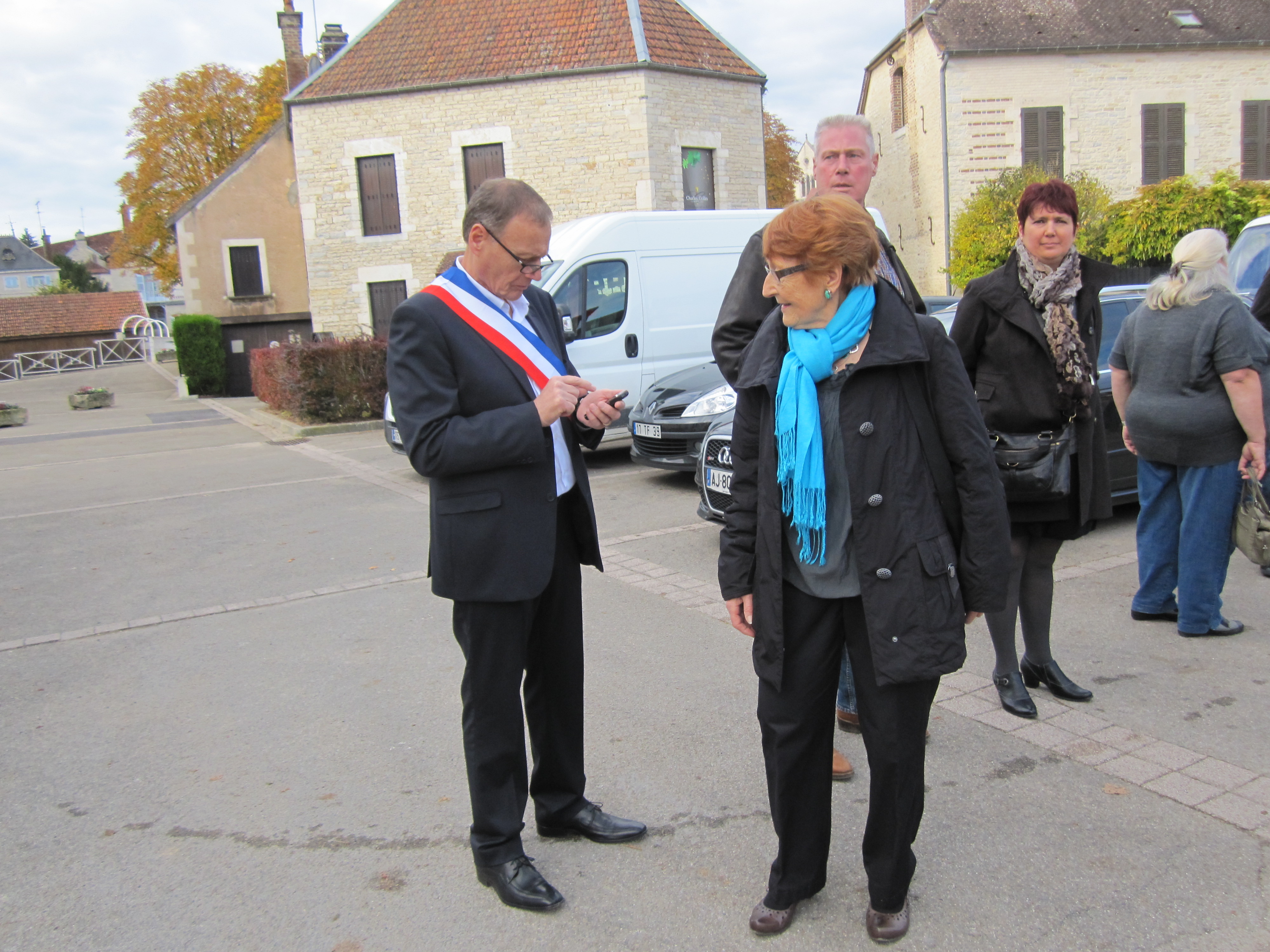
Merci, M. le Maire d’Essoyes




Janet Hulstrand is a writer, editor, writing coach, and teacher of writing and of literature who divides her time between the U.S. and France. She is the author of Demystifying the French: How to Love Them, and Make Them Love You, and is currently working on her next book, a literary memoir entitled “A Long Way from Iowa.”
An interview with Lin Wenjie, recipient of the Bourse Renoir
An interview with artist Lin Wenjie, recipient of the 2016 Bourse Renoir….(in English and in French)
Continue Reading October 26, 2018 at 10:01 am Leave a comment
Interview with Our Forestière (Bilingual post)
The latest in a series of interviews I am doing with the people of Essoyes, asking them questions about their lives, their work, and their relationship with the past, present, and future of this place….
Continue Reading February 21, 2018 at 5:53 pm Leave a comment
Interview with Bernard Pharisien, Local Historian (in English and in French)
An interview with the man who probably knows more about the history of Essoyes, and the Renoir family in Essoyes, than anyone else…
Q&A with “Anne de Champagne,” a French painter
“My job is to create a wave of happiness around me….” Interview with an Essoyenne painter in pursuit of a beautiful tradition…
A Full Circle of Franco-American Friendship
We first met our friend Jacques in the fall of 1978 when we were hired to pick grapes for champagne in his family’s vineyards during the harvest, known in that beautiful language as la vendange….
 Writing from the Heart, Reading for the Road