Allègement de confinement and freedom of the press…
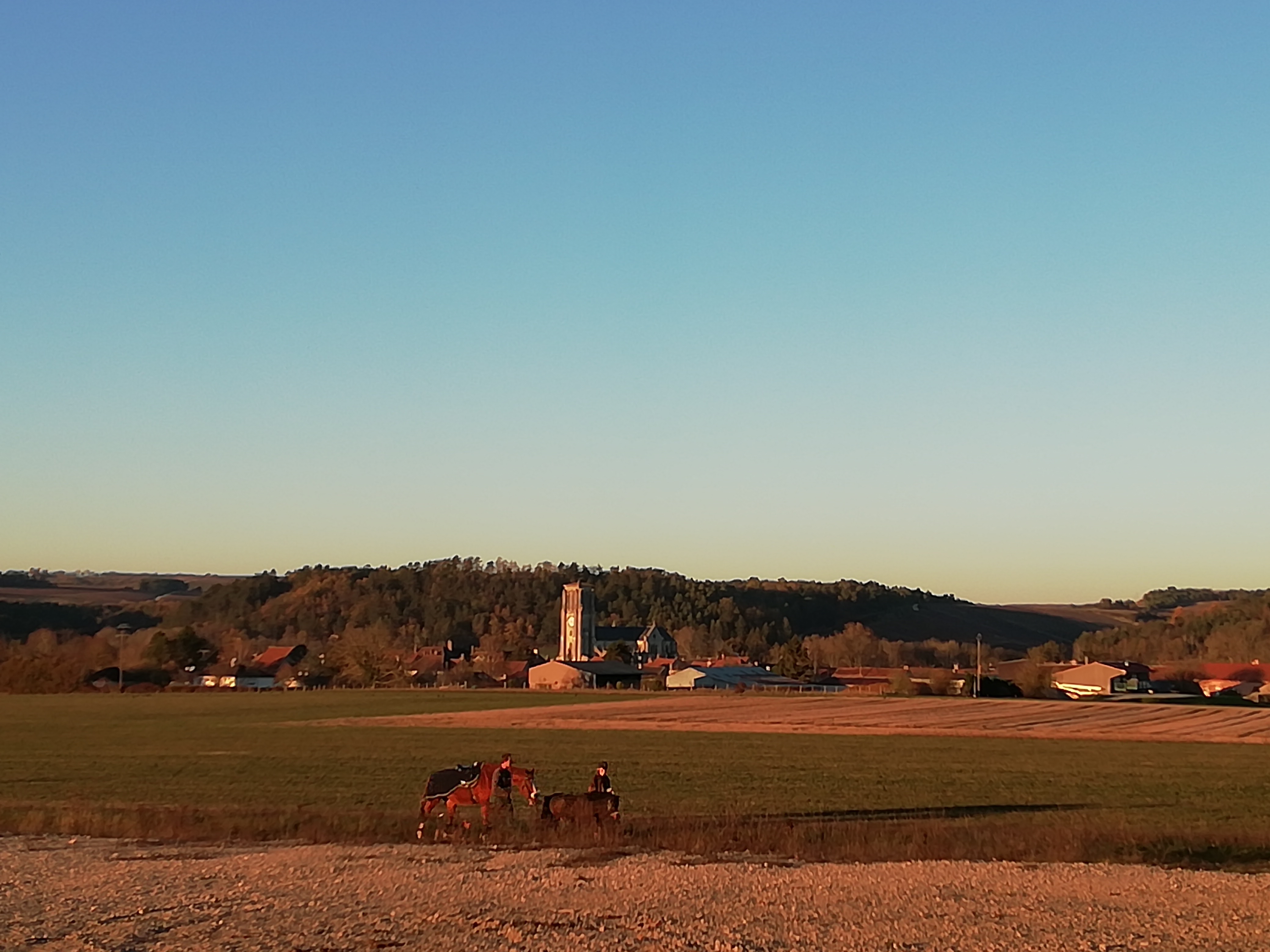
The gradual loosening of the restrictions of movement (l’allègement de confinement) that were reintroduced in France at the end of October have begun. Starting Saturday, shops were able to open again, with very strict rules and requirements designed to avoid an increase in COVID infections while slowly, carefully reopening the economy.
Last week President Macron addressed the nation again (I think it was his fifth time?) since the pandemic took hold in France last spring. This time the message was a bit more clear than the last time: this time, unlike in the spring, déconfinement will take place in stages, each one contingent upon reaching the government’s target for reducing the number of cases.
In addition to shops reopening, we are now allowed to travel a whoppin’ 20 kilometers from our homes in search of fresh air and exercise, and to stay out for a maximum of 3 hours (up from the 1 kilometer/1 hour limit) required during the past month. It is hoped that by Christmas people will be able to travel to be with their families in small groups, but it was also made clear that this also will depend on how well the nation does at following the rules that are essential in order to keep the numbers of infection down enough to reach the December 15 goal.
Many restrictions remain: for example, we still have to have attestions every time we venture out; curfews have been reinstated for the whole of France; and bars and restaurants will remain closed until at least January 20.
It’s a funny thing about those attestations: there are just nine very specific reasons that travel or any other activity outside the home is permitted. You have to choose what the reason is for your sortie and check just one box in order to have the attestation considered valid. I just want to say that in its rigidity, this is typically French! I am quite sure if the U.S. had such a system (and clearly they never will), you would at least have the option of checking “other” for those things which probably are permissible but do not easily fit into one of the nine categories. (!)
Anyway. Saturday was a beautiful day here in Essoyes, so people were out rejoicing in their new freedom. (It’s amazing how liberating it feels to be able to go 20 kilometers and stay out for 3 hours when you’ve only been allowed a tiny fraction of that freedom for a whole month!)
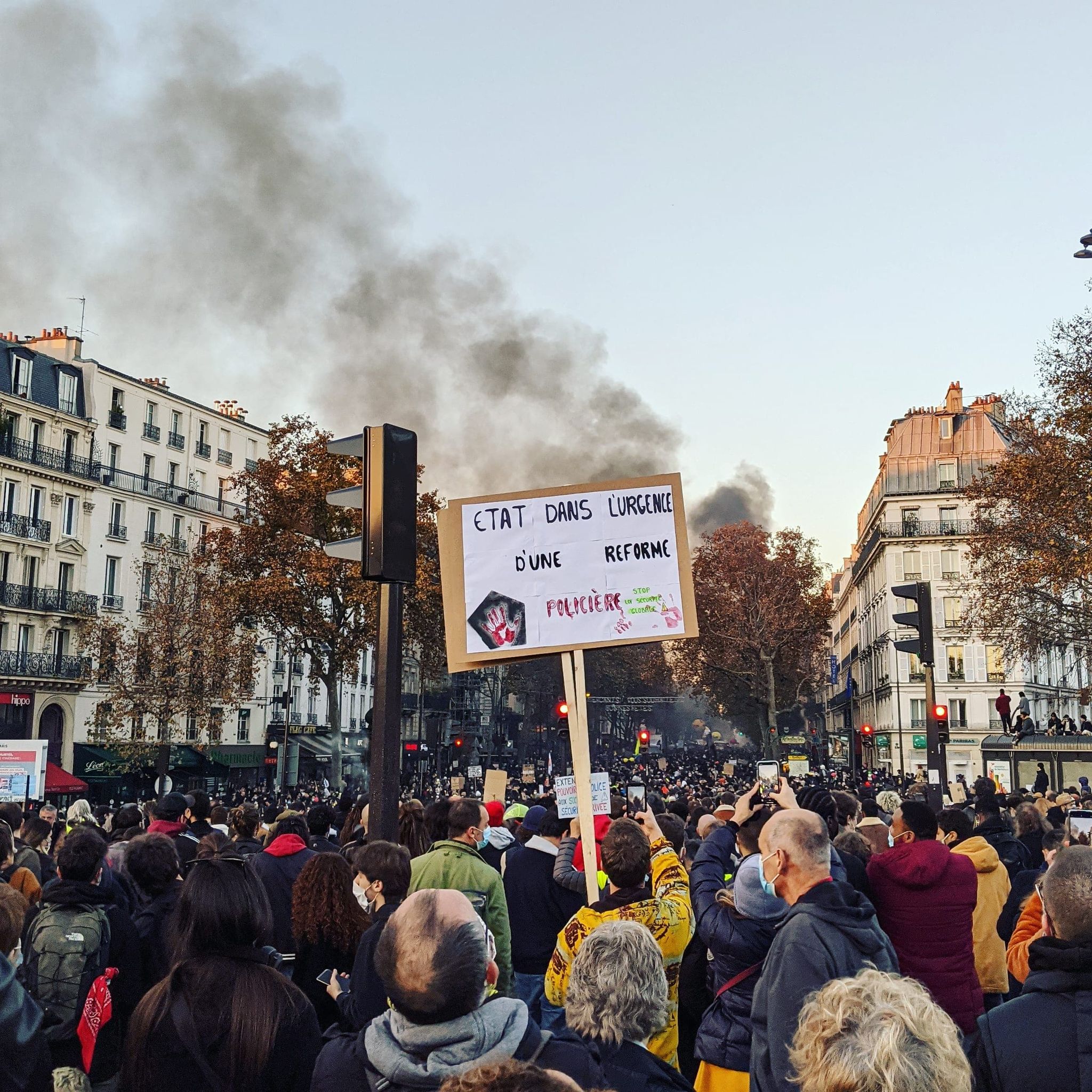
Meanwhile, in Paris the atmosphere was not very happy, nor very peaceful. The Macron administration recently proposed a new law (the loi de sécurité globale) that met with massive disapproval by the thousands of people who demonstrated the past two Saturdays in cities across France. The most troubling aspect of the new law was contained in the infamous Article 24, which would forbid the filming of police. (There was a bit more nuance to the language than that, but make no mistake: the intent was to keep members of the press, and regular citizens as well, from filming incidents of police misconduct and even brutality.) Journalists of course were vigorously opposed to such a constraint on freedom of the press, and many regular citizens joined with them in protesting furiously, and in very large numbers.
The protests were successful in getting the government to withdraw the hotly contested article. But one thing that became abundantly clear in the widespread discussion of this issue is that France is definitely in need of police reform. It’s hard to imagine what could have more clearly proven this need, and also the need for the right for citizens to document police brutality, than a video that showed three policemen violently beating a music producer they had followed into his studio, and that became public early last week.
The demonstrations on Saturday were intended to be peaceful, and mostly they were: but there were a frightening number of demonstrators, journalists, and police injured in the violence that erupted as the peaceful demonstrators were joined by not-peaceful-at-all casseurs. 😦 And there were indeed some unacceptable acts of violence committed by the police.
As a left-learning observer of the French political scene, I find it disappointing to watch Macron shift ever more toward the right. One of his strengths (and the reason he won the presidency) is that in 2017, he created a more or less centrist coalition. It is of course hard to remain in the center when you have extreme elements pulling hard from both the right and the left end of the spectrum; and even the temptation to shift a bit to the right is somewhat understandable given the problems with terrorism that France has suffered in recent years, and particularly in recent weeks. But I do hope he will find a way to recapture the spirit of cooperation and mutual respect–and a return to the middle at least!–that is going to be necessary in order to get through what is clearly a difficult time in France.
Back here in Essoyes it is more quiet. It is the time of year when some villagers are heading into the forest to collect wood for their fires. Yes, there is something here called affuage which basically means, in this context, the right to gather wood from certain specific little sections of the national forest. Everyone who lives in Essoyes has this right, plus an assigned piece of the forest in which they are allowed to cut and gather wood. As a homeowner here, I too have this right, though it is not one I am exercising. I am very proud of the fact that I’ve managed to learn to be pretty good at stacking wood (thanks to the helpful guidance I received from Cody at wrangler.com 🙂 ) And I have a very nice exploiteur who brings me the wood I need every winter. I had hoped to advance to splitting wood by now, but I’m not sure I will ever be able to add that to my list of lumberjack skills. One thing at a time…
We’re heading into that time of year when at least several of the world’s religions celebrate the concept of light shining through the darkness, drawing on pagan traditions that did the same thing. It’s a good time of year to do so, and I daresay a good year in which to do it.
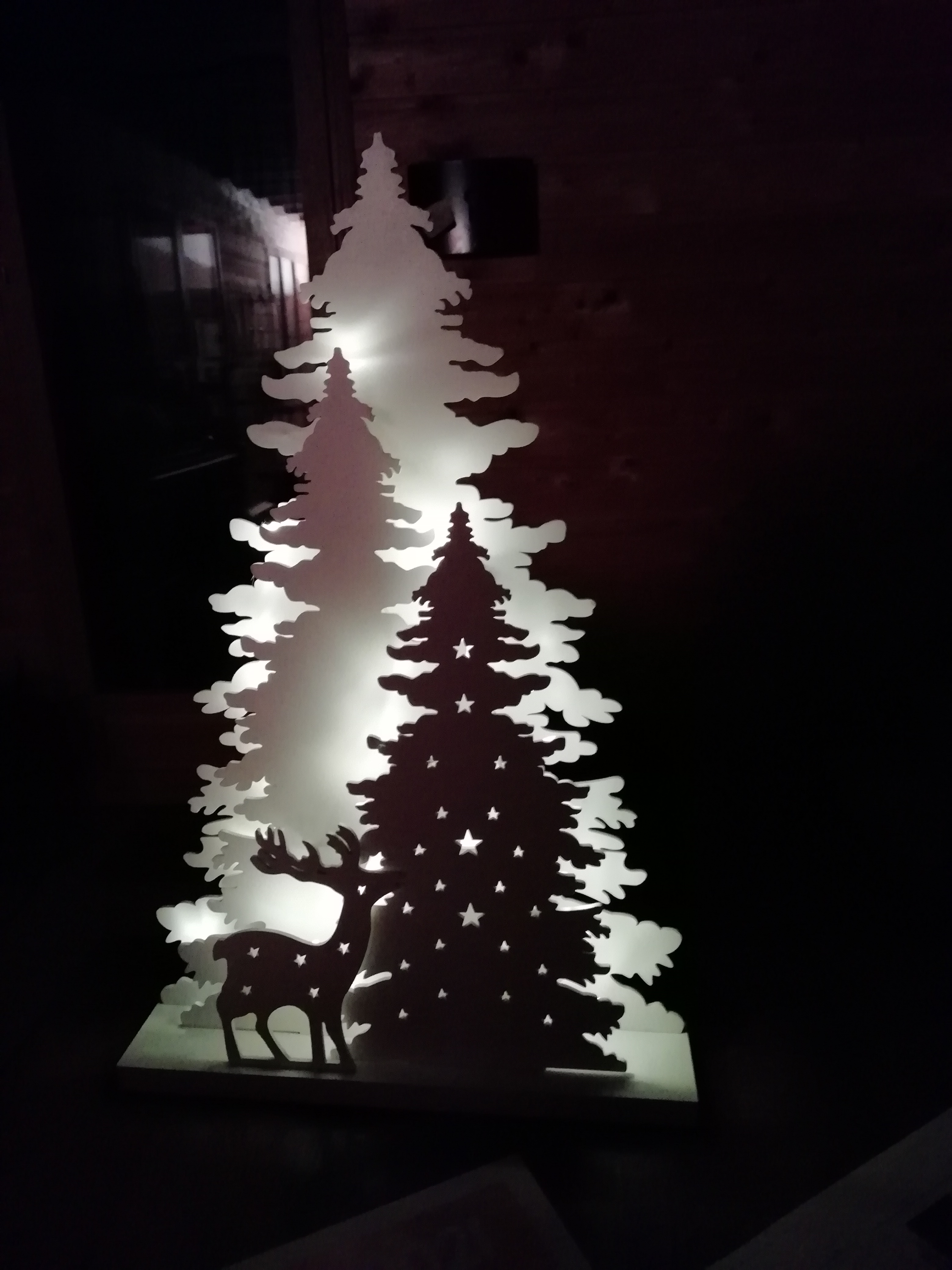
Wishing you and yours a peaceful, happy, safe, healthy holiday season, however and wherever you celebrate it, and even if you don’t.
Janet Hulstrand is a writer, editor, writing coach, and teacher of writing and of literature who divides her time between the U.S. and France. She is the author of Demystifying the French: How to Love Them, and Make Them Love You, and is currently working on her next book, a literary memoir entitled “A Long Way from Iowa.”
A different kind of Thanksgiving…
It’s less than a week to Thanksgiving, and only a few weeks away from Christmas. And there’s a lot of agony (both in my homeland of the U.S., and in France) about whether people will be able to celebrate these wonderful holidays in the way to which we are accustomed this year.
I do understand the agony: these are my two favorite holidays and I love celebrating them in the way we usually do. Here is a post I wrote just last year about last Thanksgiving, which I celebrated with my sons and some friends here in France.
But here is the problem this year. The problem is the pandemic. We all know this!
And here is my own unscientific (but based on what I have been able to learn from the scientists) view of why we should NOT celebrate either of these holidays in the way we are accustomed to doing, not this year.
Let’s line up some of the main features of how we celebrate these holidays:
We travel long distances among crowds of other people to be together with those we love;
We get together (inside) with large numbers of people where we sing, dance, and linger over tables full of food that we share with each other.
We sit together for hours at a table enjoying eating, talking, laughing, telling stories.
(All activities, by the way, that prevent the all-important wearing of masks and tend to ignore the rules of physical distancing…)
On top of it, we do all this at a time of year when the weather is not good, lots of people are getting sick, and in the month prior to the statistically highest month of the year for deaths. (!)
What is wrong with all of this, in terms of containing a pandemic?
Well, just about everything, really. So to me it seems the answer is pretty clear: if we want most (or ideally, all) of the members of our family to make it through to next Thanksgiving and Christmas, most of us should probably exercise delayed gratification this year.
Delayed gratification is a concept that is very difficult for children to understand or accept, but it shouldn’t really be that hard for the rest of us, right?
We are lucky to be able to substitute alternative ways of celebrating these holidays together this year: most of us can Zoom with as many people as we like. We can tell stories, laugh, and sing if we want via Zoom, all without endangering ourselves or anyone else.
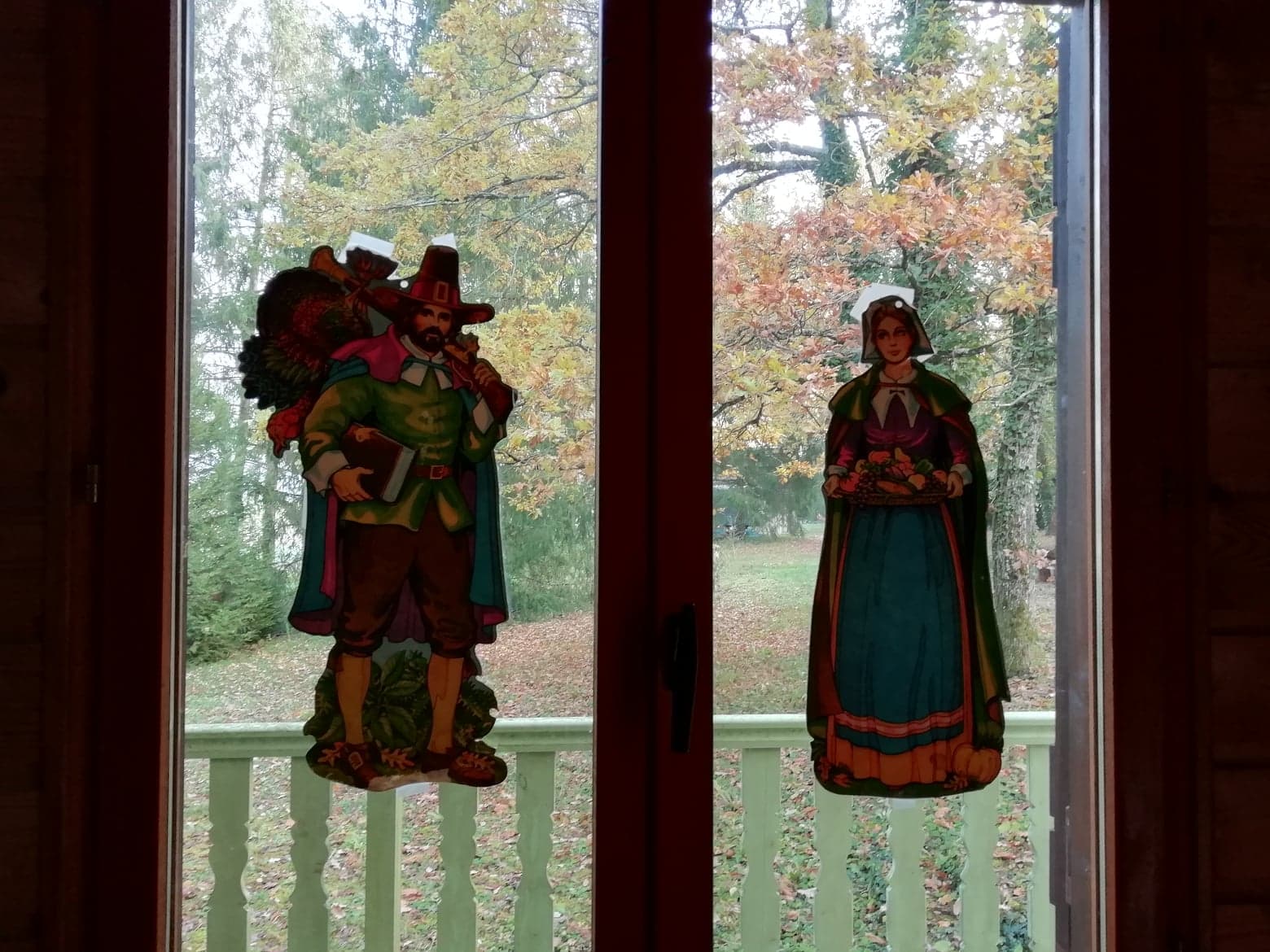
We can put up the decorations that cheer us (like my silly cardboard Pilgrims shown above, one of my Thanksgiving traditions).
We can buy and enjoy an excellent feast for one, or two, or three (whomever we are spending our time with already, in quarantine) from a local restaurant that is able to safely prepare food for us. (They need our help!!!!)
And we can read poetry or stories to each other that remind us of all we have to be thankful for–including the hope of a vaccine to come soon, thanks again to the scientists among us.
Here is one of my favorite Thanksgiving poems, “A Minnesota Thanksgiving,” by John Berryman.
If we are allowed to be with each other, in small groups, we should also take whatever precautions we can to ensure that we won’t be sorry we did so–whether that means getting tested before seeing each other, wearing masks even inside our homes, and not hugging each other, which is in my opinion one of the hardest things about all of this. (My sons and I have developed an alternative: hugging oneself while standing at a safe distance from each other. Like this…)

It’s certainly not as good as the old-fashioned way, but at least you get hugged! And it’s safer…
Wishing everyone a safe, happy, healthy Thanksgiving…and hoping for a return to a more traditional celebration next year!
Janet Hulstrand is a writer, editor, writing coach, and teacher of writing and of literature who divides her time between the U.S. and France. She is the author of Demystifying the French: How to Love Them, and Make Them Love You, and is currently working on her next book, a literary memoir entitled “A Long Way from Iowa.”
How You (Yes, You!) Can Help Writers
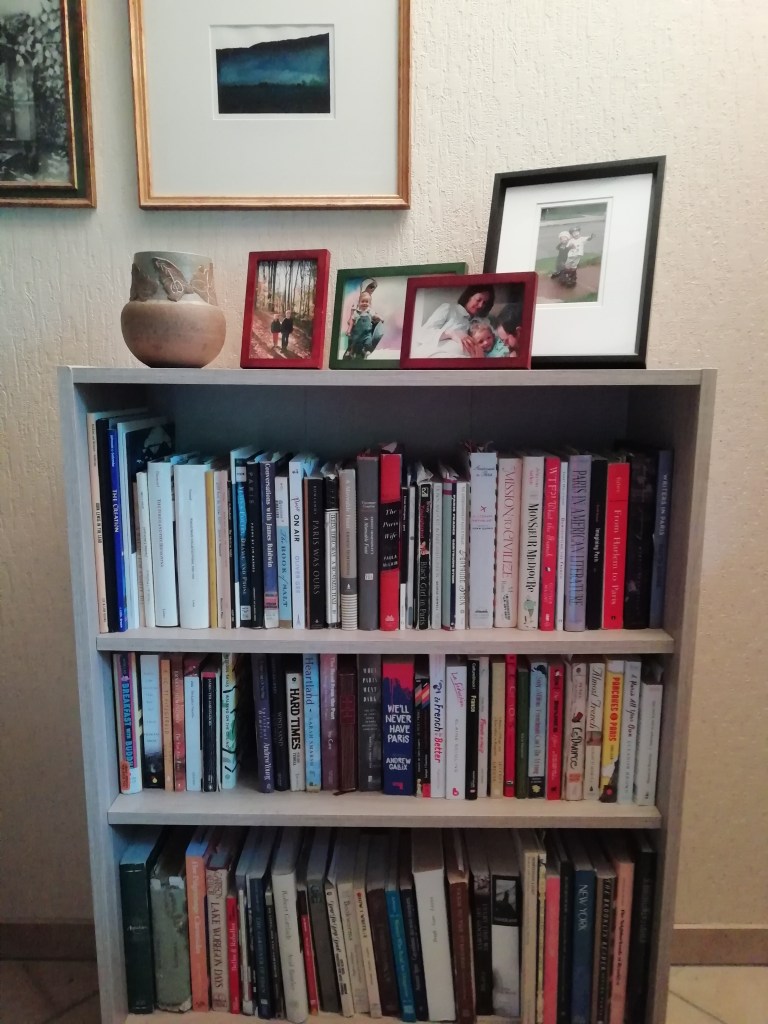
- Buy books if you can afford to. If you have “too many books”… (But is there really such a thing? Most writers, and even many readers, don’t really think so…Too few bookshelves, certainly. But too many books? Ridiculous!). But anyway, if you think you have too many books, well then, buy them, read them, then give them to friends, or better yet to the library or other places that accept used books–hospitals? prisons? schools?
- Buy new books if you can afford to. The reason for this is that if you buy used books, the only entity to make any money is whomever is selling the book. The publisher gets nothing: the author gets nothing. This makes it hard for authors and publishers to stay alive! So do what you can. If you really need to buy used books (and believe me, I understand if you do) you can still write reviews, and that will help authors and publishers.
- Review books on Amazon or GoodReads. I think it is absolutely wonderful that we no longer have to rely only on professional book reviewers to tell us about books. Most people don’t know HOW MUCH these reviews help writers: they help A LOT! And they are so easy to do. Having said that, I think it’s only right that if we’re going to be influencing people’s decisions about whether or not to buy (or read) a book we should be fair about it. Here is a post I wrote about how to be fair when writing a review. (I explain how easy it is also, in that same post.)
- Buy from indie bookstores, in person or online. My own personal favorite indies are the Red Wheelbarrow Bookstore in Paris, and BonjourBooksDC and Politics and Prose in the Washington DC area. But there are wonderful indie bookstores pretty much everywhere, and they need our support! If you’re not near a store, you can buy books online from many indies: and even if your local indie doesn’t sell online, you can support indie bookstores by purchasing books online from IndieBound or Bookshop.org.
And now just two please-don’ts:
- Please don’t ask your writer friends if you can have free copies of their books (!) They need their friends and family members to BUY their books, and then tell all their friends about the book, and write reviews of their books, and give their friends gifts of the book, and…like that. (You can trust me on this. They really do!! Writing books is not such an easy way to make a living: indeed, this is a huge understatement.)
- Please don’t go to indie bookstores to browse and then buy the books online from you-know-who. How do you think the indie booksellers are going to pay the rent on that lovely space they are providing for you, where you can hang out and spend time with other booklovers, and go to cool book events, if you don’t buy books from them? Hmm? I mean, really. Think it through! This post spells out some of the many reasons why it’s good to support indie bookstores.
Well, anyway, I hope as you consider your holiday shopping this year, you will consider doing some of the above. It’s been a hard year, especially for small businesses, including indie bookstores. So I trust you will do what you can to help them out. They deserve it!
Janet Hulstrand is a writer, editor, writing coach, and teacher of writing and of literature who divides her time between the U.S. and France. She is the author of Demystifying the French: How to Love Them, and Make Them Love You, and is currently working on her next book, a literary memoir entitled “A Long Way from Iowa.”
Hooray!

Janet Hulstrand is a writer, editor, writing coach, and teacher of writing and of literature who divides her time between the U.S. and France. She is the author of Demystifying the French: How to Love Them, and Make Them Love You, and is currently working on her next book, a literary memoir entitled “A Long Way from Iowa.”
Reconfinement: Here we go again…

The numbers are high, too high. The curfew wasn’t really helping anything. (Honestly, very few people thought that it would.) And so we have been confined to our homes again. We have to carry attestations, explaining why we are leaving our homes if we are leaving them, and there are only a certain number of reasons that are acceptable for doing so. Many stores, and all restaurants and bars are closed. We have to stay within a kilometer of our homes. And so on…
This confinement is supposed to be “different” (i.e. less confining) than the one last spring. I’m not sure it really is less confining, but it certainly is more confusing. Never mind the details: they are, well, confusing…
However, the main idea is clear. Stay home. Be careful. Wear masks. Wash hands, don’t touch face. Etc.
And the purpose is certainly clear: to keep as many people as possible safe, and healthy. And to keep the hospitals from becoming overcrowded, and healthcare workers able to do their jobs without becoming totally exhausted.
So, okay. Deep breath. On y va encore…(or should I say on y reste encore?)
And once again, I must acknowledge this important fact: if one has to be confined somewhere, I have very little to complain about.
In fact, I have absolutely nothing to complain about.
Stay well, everyone. Et prenez soin de vous…
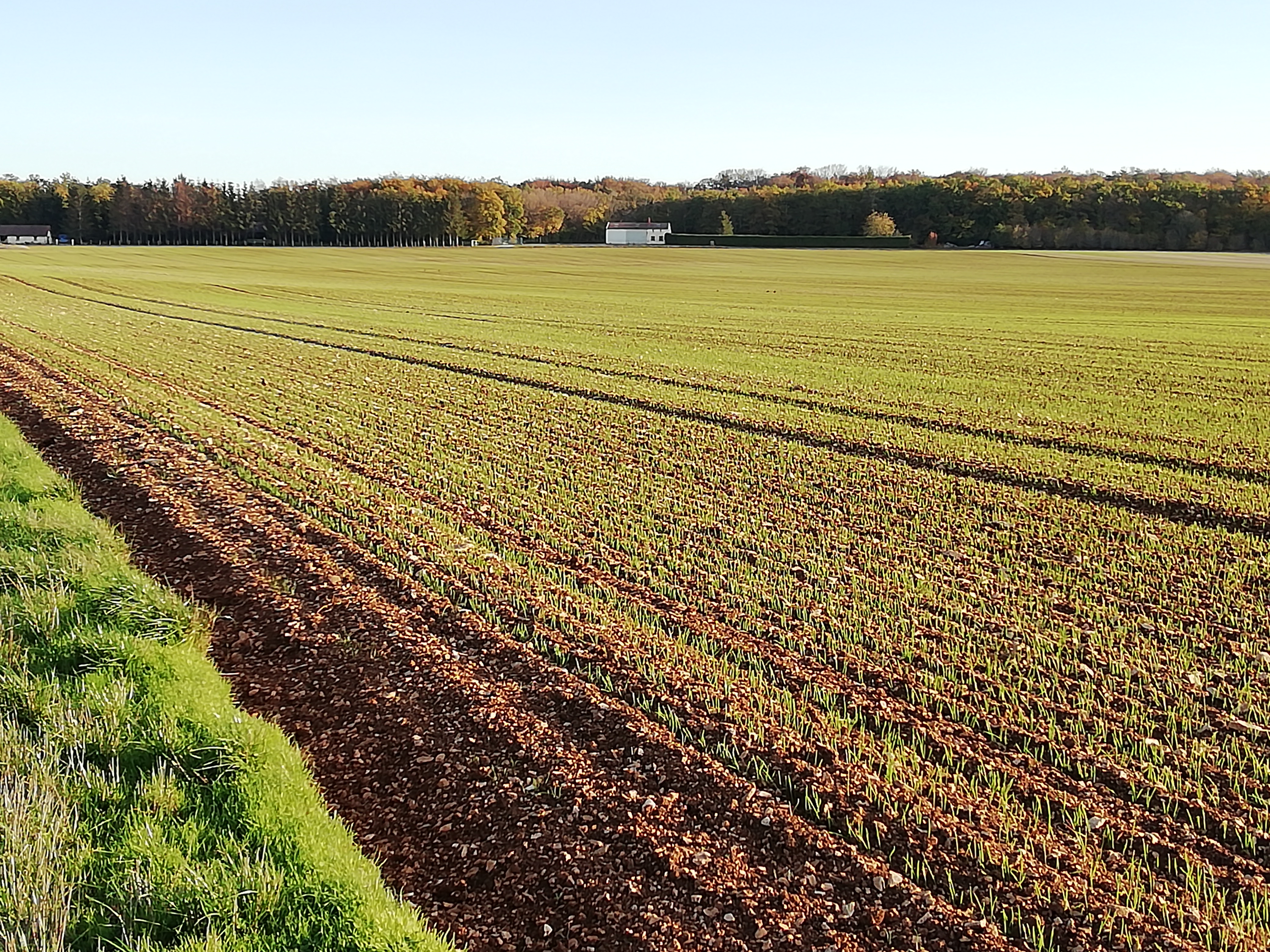
Janet Hulstrand is a writer, editor, writing coach, and teacher of writing and of literature who divides her time between the U.S. and France. She is the author of Demystifying the French: How to Love Them, and Make Them Love You, and is currently working on her next book, a literary memoir entitled “A Long Way from Iowa.”
“Couvre feu” means curfew
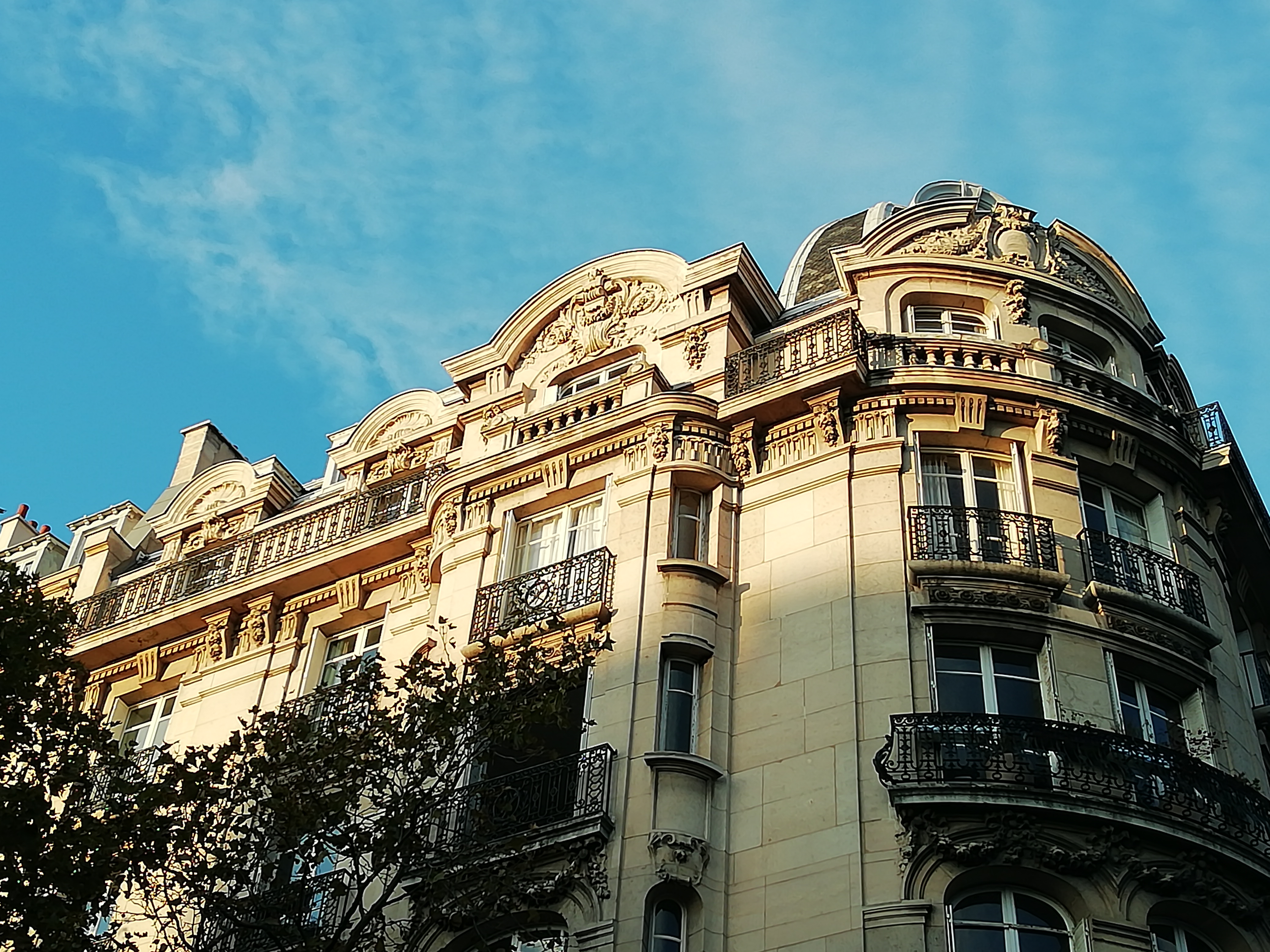
I was in Paris again last week, mainly to see my eye doctor, and get my glasses adjusted to my new post-cataract-surgery vision, but I also had the chance to do a few fun things while I was there: to celebrate a friend’s birthday, to have a couple of meals with my son, to take a turn around the lovely Square du Temple during a break from my work, to attend my friend Adrian Leeds Après-Midi meetup, and see the documentary Meeting Jim, about Jim Haynes.
Life in Paris has changed a bit since I was last there. As the number of COVID cases has started to rise, too quickly for anyone’s comfort, new restrictions, and stronger and more frequent reminders of all the ways we are supposed to be keeping ourselves and everyone else safer are ubiquitous. Every restaurant and cafe that I went to had a bottle of sanitizer on every table, as well as at the entrance to the establishment. Stores and Metro stations also have bottles available as you enter: the ones in the Metro have foot pedals so no one has to touch anything. There are also sign-in sheets in restaurants for anyone coming in a group, which is to make it easy for the establishment to help with contact tracing should the need arise. No group can be larger than six people, and physical distancing rules between tables must be adhered to. And everyone, well, pretty much everyone, is now wearing masks throughout the city, inside and out. If you get caught not wearing one, there’s a hefty 135 euro fee. That helps with compliance!
There was a fair amount of suspense during the few days I was there, since it was announced that President Macron would be addressing the nation again, on Wednesday evening, but not what he would say. So of course everyone was dreading a return to a national general confinement, and the necessity of filling out permission slips if we strayed more than a kilometer from our homes. As it turns out, the most concerning areas, not surprisingly, are nine big cities in France (Paris, Lille, Toulouse, Marseille, Lyon, Montpelier, Grenoble, Rouen, and St. Etienne ), and as of Saturday they were put under a curfew, which means that everyone, with very few exceptions, has to be in their homes, and stay there, from 9 pm until 6 am. The curfew will last at least four weeks, more likely six. (It took me a while to realize that the “couvre feu” I kept hearing about on the radio was the same thing as “curfew.” Voila: another new term learned.)
This of course is very hard on restaurateurs and also anyone in the broad category of culture (theater, music, dance, cinema). I’m not going to try to say whether or not I think this measure will meet the government’s objective. I hope it will, because the idea is to try to keep the hospitals from getting overcrowded, health care workers overwhelmed, and everyone in less danger of the virus spreading. One can only hope…
Anyway, I left Paris one day before the curfew began, so I didn’t get to see the unusual sight of the “City of Light” suddenly quiet and dark at 9 pm.
On Sunday I had the chance to talk about my book, Demystifying the French with the wonderful Jennifer Fulton of Bonjour Books DC, in Kensington, Maryland, just outside of Washington D.C. Jennifer had gathered a great group via Zoom, and we had lots of fun discussing with them the finer points of how to appreciate the French, and how to learn and understand the rules that guide their behavior.
You can buy my book, and a host of other wonderful books (mostly in French, but also some books about France in English) from Jennifer online, and I urge you to do so. She is, as an indie bookseller, one of the champions in the world of publishing. And we readers (and writers) need to support our champions!
And so I am back to my quiet life in a little village in Champagne. The trucks going up the hill alongside our road are mostly hauling wood now, and my wood for the winter has been delivered: so I have my work cut out for me, to get it properly stacked.

Wednesday was a national day of homage and mourning in France, after a horrific act of terrorism took place last week in a town not far from Paris. A middle school history teacher was brutally murdered in the street as he was walking home from school. I won’t go into the awful details of what happened; there’s a pretty good account here. I will say that this tragedy is one more symptom of a terribly difficult, complex social and cultural problem in France, and a subject that is very difficult to discuss with the calm perspective that will surely be needed in order to begin to solve it, though people are certainly trying. It was, among other things, an attack on one of the most beautiful aspects of French culture–that is, respect for the life of the mind, and the ability to debate controversial topics in a way that is intellectually challenging, reasonable, respectful, rational, and sound.
It was also the tragic loss of a husband, father, and much beloved teacher who was devoted to his work, teaching French youth about those values. It is hard to know what to say. It is very, very sad. The teacher was, as President Macron said in his homage to him, “un hero tranquille” (a quiet, peaceful hero). He will be sorely missed, but it is clear from the testimony of his students that Samuel Paty, and his deep belief in tolerance, understanding, respect for others, and the importance of the continuing pursuit of knowledge will not be forgotten. And the lessons he taught, and the values he inspired in hundreds of students over the years will live on.

Janet Hulstrand is a writer, editor, writing coach, and teacher of writing and of literature who divides her time between the U.S. and France. She is the author of Demystifying the French: How to Love Them, and Make Them Love You, and is currently working on her next book, a literary memoir entitled “A Long Way from Iowa.”
Demystifying the French, via Zoom!
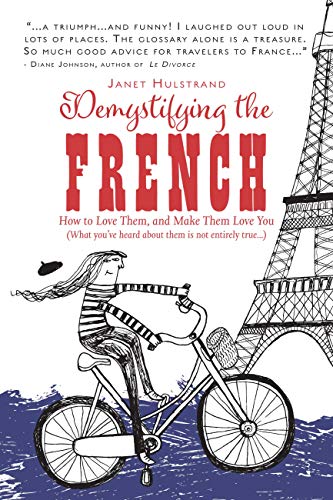
Today’s the day! I’ll be chatting with Jennifer Fulton, of the wonderful Bonjour Books DC today at 11 am Eastern Standard Time, about Demystifying the French. Want to join us? Here’s the link!
Janet Hulstrand is a writer, editor, writing coach, and teacher of writing and of literature who divides her time between the U.S. and France. She is the author of Demystifying the French: How to Love Them, and Make Them Love You, and is currently working on her next book, a literary memoir entitled “A Long Way from Iowa.”
How to Write a Book Review on Amazon (or anywhere)
One of the most helpful things readers can do to help writers (and publishers, and everyone else who creates and produces books) is to write reviews on Amazon, GoodReads, and elsewhere. And it is so easy to do!
The Other Bonjour Effect…
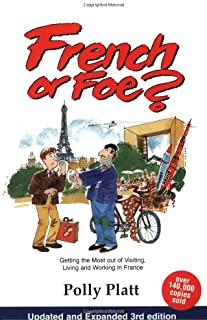
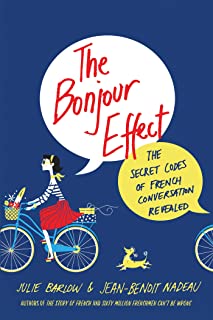
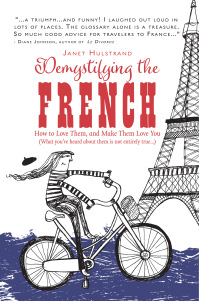
Many people, including yours truly, have written about the importance of starting any social (or commercial, or casual) interaction in France with the word “Bonjour,” ideally followed by “monsieur” or “madame.” (The great Polly Platt, author of French or Foe? told her readers that “the form is rigid.”) In the first chapter of Julie Barlow and Jean-Benoit Nadeau’s excellent book, The Bonjour Effect: The Secret Codes of French Conversation Revealed, the authors explain thoroughly, and very interestingly, the reasons for why this is so important. (The chapter title gives an intriguing clue to one of the reasons: “I Greet, Therefore I Am.” )
I often explain to my students that in France, this obligatory and very pro forma greeting also carries the implication that “I am greeting you, therefore you exist too!” And in my book, Demystifying the French, I sum up the importance of saying bonjour to everyone you encounter as being “just part of treating someone like a human being in France.”
Unfortunately, failing to do so can also be seen as a way of dismissing, ignoring, or insulting your fellow human beings.
So. Not knowing this rule often causes unsuspecting and unaware-of-this- rule Americans (and I suppose other foreigners) in France a lot of trouble. It is a trap constantly waiting for us to step into; and time and time again, we do. I continue to do so now, even though I know very well how important it is. (In Demystifying the French, I give some advice about what to do when you inevitably forget, and how to repair the damage.)
And while many of us foreigners therefore view this very strict rule of French etiquette—as well as others–as something of a nuisance, these niceties do have their benefits.
About a year ago, my son and I had been invited to a post-grape-harvest celebration by our friends who own the pressoir in our village. As we approached the pressoir I explained to my son that it is expected on arriving that you greet everyone who is there with either a bise (the famous French air-kiss, cheek to cheek), or a handshake. (And yes, it is not always easy to know which of these two forms of greeting should be used: but for now, it doesn’t matter because of COVID. Because we are not supposed to be doing either of these things for the time being…the President of France has said so!)
In any case, my son said, “Really?! Every person there?” “Yes,” I said, as I ignored his incredulous look, and steeled my reserved, Scandinavian Midwestern self for the ordeal.
On arriving I took a deep breath and held out my hand, or offered my cheek to each person I encountered on the way inside, following the cues they offered. My son followed me inside, gamely playing along.
Later in the evening, a perfect stranger came over to us and shook our hands, and offered us a friendly Bonsoir as he made his rounds of the room. After he had (quickly) moved on, my son looked at me and said, “Well. I can’t do it myself. But it is kinda nice…”
Indeed it is “kinda nice,” to be acknowledged as a living, breathing human being, by other living, breathing human beings, once you get used to it.
Last week I had another surprisingly moving experience with the bonjour effect. I had to have surgery for cataracts. It’s kind of a scary thing to have surgery on your eyes, really, no matter how much you trust the surgeon. I did trust my surgeon, and the anesthesiologist, with whom I had an online consultation the day before the surgery, during which he let me know what to expect, step by step, throughout the procedure. But I was still a bit nervous, especially since I knew I would not be rendered completely unconscious for the operation. (I prefer to not be at all conscious for these kinds of things…)
On arriving at the hospital early in the morning, and after making my way past the front desk and up the elevator to the opthamological unit, I was directed to “me patienter” in a waiting room. The first thing I noticed was that the window was slightly open, letting a warm, gentle breeze into the room; and that out the window was a lovely view of Parisian rooftops. The second thing I noticed was that there was a handwritten note on a whiteboard: it said “Nous prenons soin de vous…” (“We (will) take care of you…”)
This made me feel better, a bit more relaxed. Not too much later, I was clothed in sterile scrubs and on my way to the staging area for the operating room, and then climbing onto an operating table. The anesthesiologist stopped by to say a quick, warm bonjour (of course!) And then I was being wheeled rapidly toward the operating room.
That is when the unexpectedly rich meaning of bonjour in this new context came alive for me. For as I was being wheeled down that hallway, which seemed to me a blur of gray and metal surfaces moving past me quickly, with cold, bright lights above me, a procession of warm, friendly faces above bodies in blue scrub suits moved past me heading quickly in the same direction. I don’t know if these warm, friendly faces belonged to the people that would be part of the team attending to me during the surgery, or if they were just passing by on their way to somewhere else. What I do know is that as each of them passed by me they turned their faces in my direction, and said, in that lovely, lilting French way a warm, friendly, encouraging “Bonjour!” And in the context of that little scene, it seemed to me that each of their faces was full of color: the colors of human life–a variety of skin tones, eye colors, eyebrows, lips, teeth set in friendly faces!–standing out against the grays, the metal, the harsh bright lights above. And every one of them was wishing me well, giving me courage, letting me know that they (or someone) would take good care of me…
I felt so very blessed, and cared for in that moment. Soon after I was given the drugs that would (apparently) render me not fully unconscious, but relaxed enough that it didn’t matter. The anesthesiologist, who by now felt like a close friend, was there: so was the nurse I had met upstairs, the one who put drops in my eye. The doctor appeared; he applied his surgical expertise to my eye; and now, a week later, I am able to see so much better than I had been able to do for months before.
I don’t think I’ll ever forget that powerful bonjour experience. It was very memorable.
Can it help me remember to always say bonjour to the people I encounter in my everyday life in the future?
Well, maybe…I’ll keep trying!
Janet Hulstrand is a writer, editor, writing coach, and teacher of writing and of literature who divides her time between the U.S. and France. She is the author of Demystifying the French: How to Love Them, and Make Them Love You, and is currently working on her next book, a literary memoir entitled “A Long Way from Iowa.”
Shuttling between Paris and Champagne
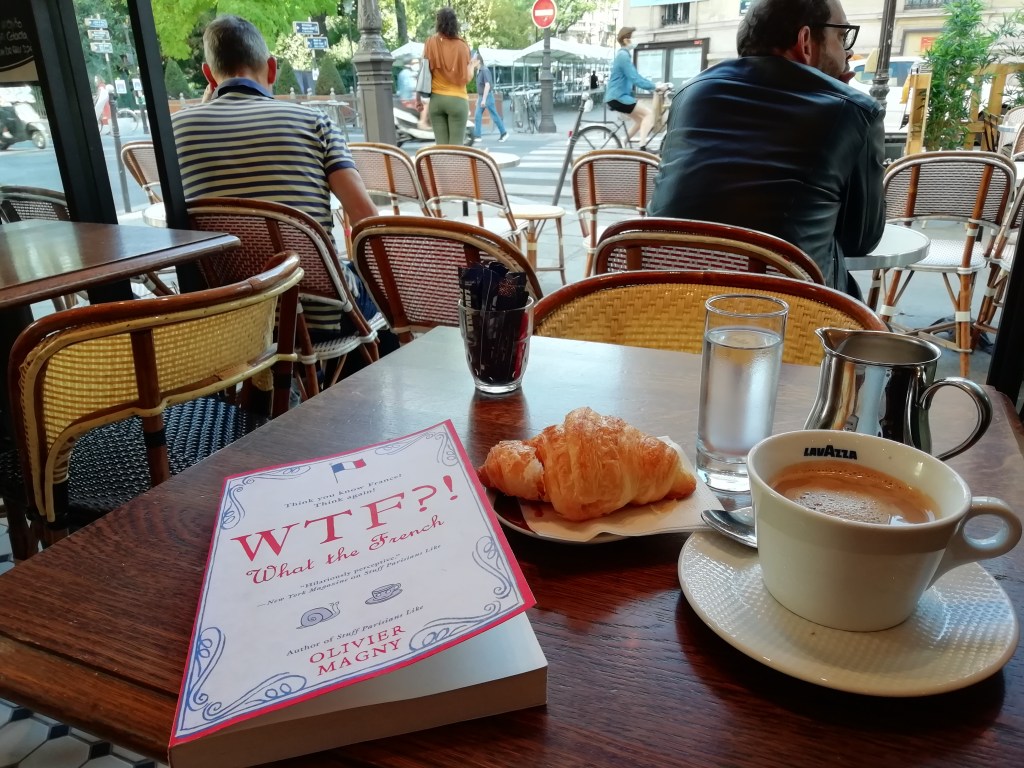
I’ve been lucky enough to be shuttling between two of my favorite places in France (and I guess therefore in the world) this month: Paris, and “my” little village of Essoyes in Champagne.
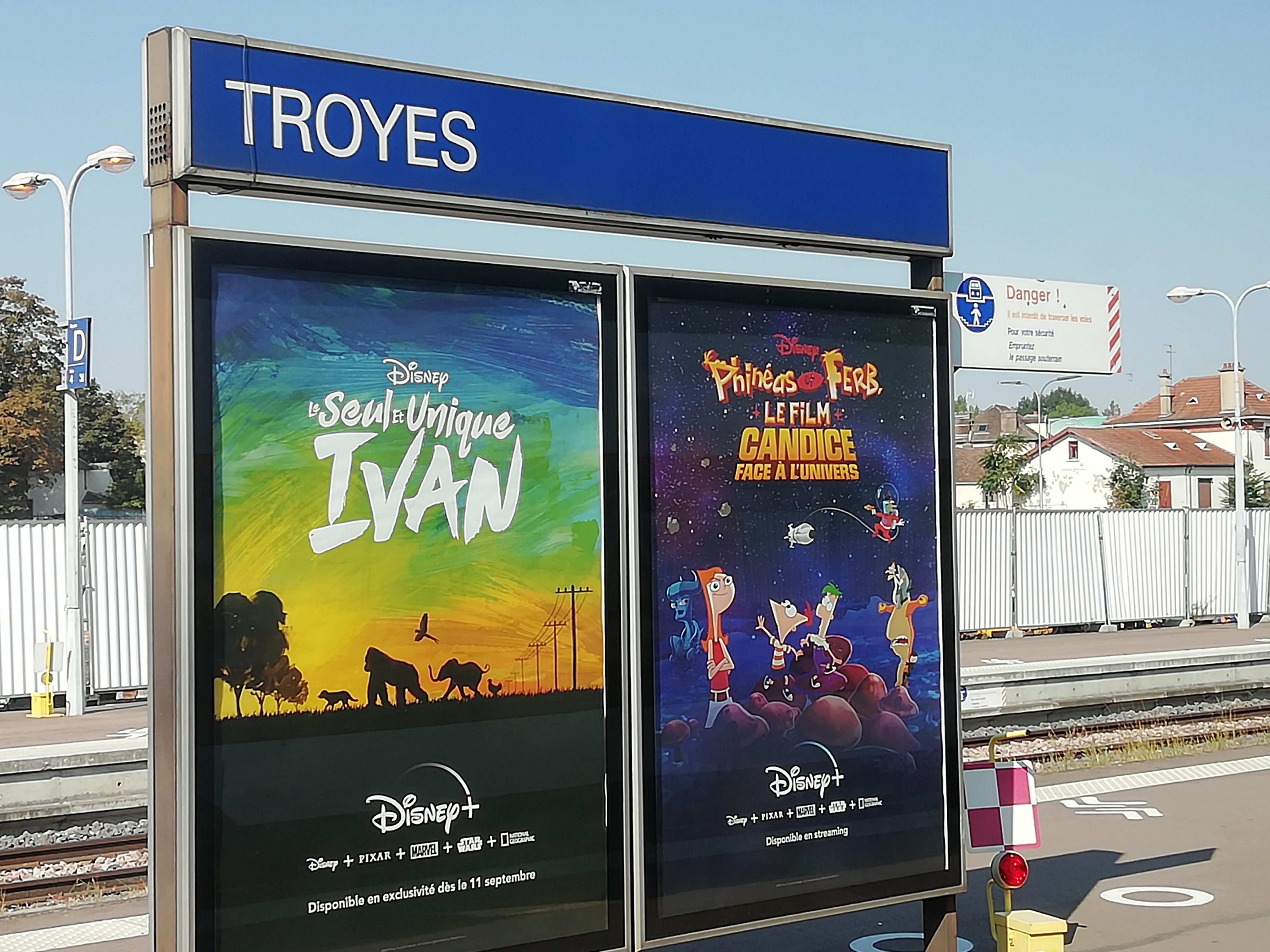
It’s only about 2 1/2 hours from Paris to Essoyes, and I usually do most of that trip by train, either from Troyes or Vendeuvre-sur-Barse. So it really can be done as a day trip, and occasionally I have done that, for example to attend my friend Adrian Leeds’s Après-Midi meetups in the Marais. My timing was lucky this month, in that I was able to attend the first in-person Après-Midi to be held at the Café de la Mairie since the lockdown began last spring.
Adrian has been conducting Zoom meet-ups since May: this time the guest speaker was the wonderful Cara Black, who was talking about her latest book, Three Hours in Paris, which is a thriller set in 1940, in newly-occupied Paris. Cara lives in San Francisco and was not able to come to Paris as planned (because most Americans–understandably–aren’t allowed into France for now 😦 ), but she got up at 6:00 in the morning so she could Zoom with us for our afternoon meeting. Her new book is fascinating! It deals with the (historical) fact that when Hitler came to Paris in June 1940, he left again quite suddenly, abruptly, and inexplicably. Why did he do that? was what Cara wondered, and from that wondering she has created a fascinating novel about an American woman, a sharpshooter from Oregon, who is assigned the task of attempting to assassinate him.
It is always good to be in Paris, and September is a particularly fine time to be there. Everyone is back from wherever they had gone this summer and (almost) everyone seems to be adjusting to the new rules for wearing masks, keeping physical distance from each other, and observing les gestes barrières. Most people are wearing masks, and most of them are wearing them correctly. (The most common infraction is not covering the nose–not good enough, people!) Consequently, it is not an infrequent sight to see two friends encounter each other on the street, one of them walk right by the other one, and then stop short, turn around, and say, “Oh, I didn’t know it was you!”

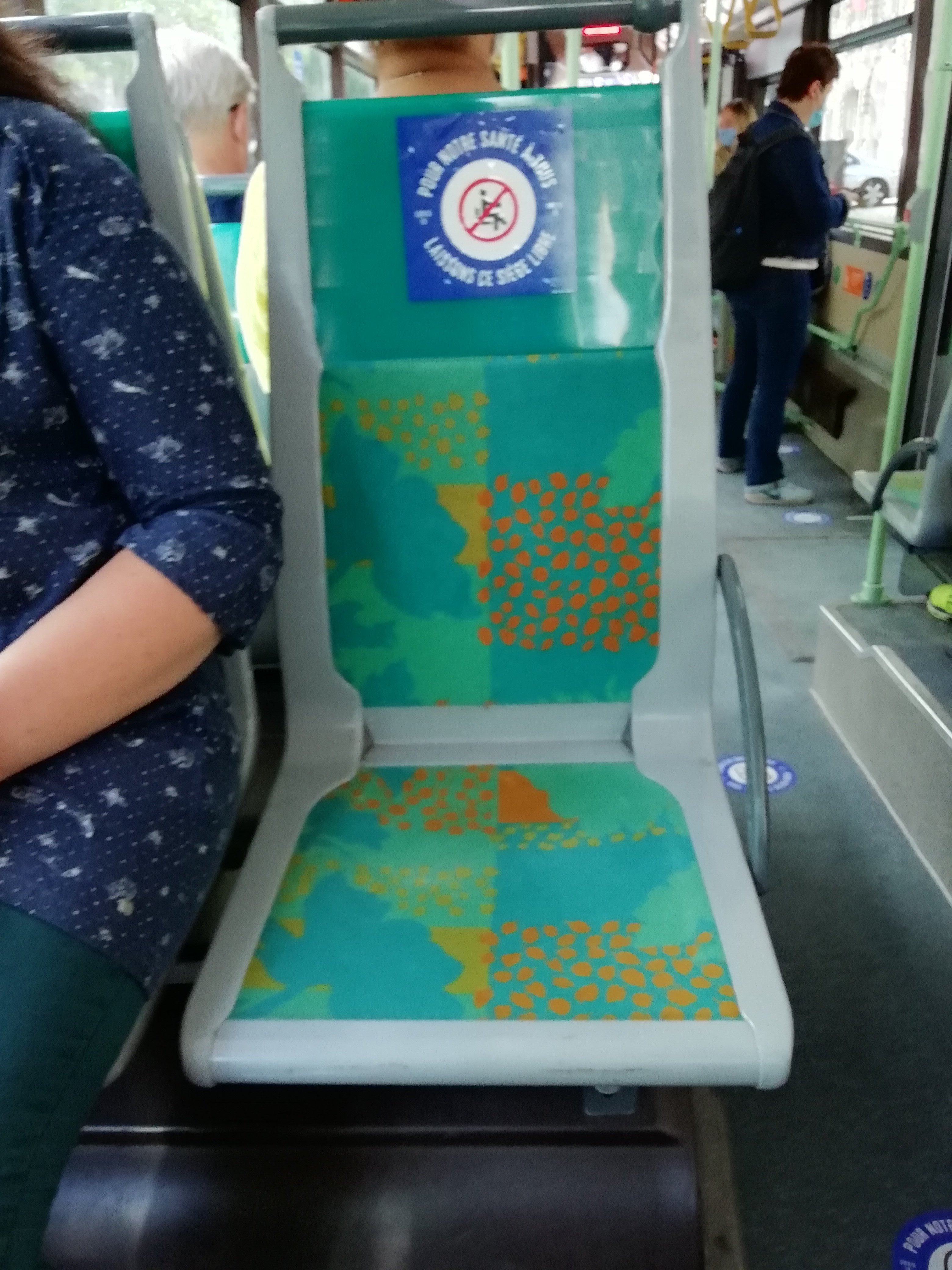
On one of the days I was in Paris I was stuck inside working on a project I needed to do. It was a gorgeous day outside, I could see that, but I wasn’t out in it, enjoying it. Then I began to think about various things that were concerning me, and before not too long I had slid into a not very positive state of mind.
So I decided to pull myself together, and “snap out of it.” I got my work project to the place I had promised myself I would; I went off to the pharmacy to pick up a prescription I needed; and then I found a table at a sidewalk cafe, where I ordered a kir, and then just sat there for an hour, watching the world go by.
There are very few of the mundane worries in life that can’t be made better by spending an hour just sitting in a Parisian cafe, with a cup of coffee or a glass of wine. And so that is what I did. And it worked!
In Essoyes, the vendange has come and gone. It’s not saying anything new to say that 2020 has been a challenging year for almost everyone around the world. And that goes for the vendange as well.
I’ve written about the vendange in Essoyes in the past, for example here and here. There are good years, and there are bad years: this was NOT a good year for my friends and neighbors who make champagne. After a very hot, dry summer the harvest was both early and short–it began during the third week in August and was over before September 1, for most vignerons only about 8 days I think. Our friend from the pressoir in Essoyes came by to say a quick hello after it was over, and explained some of the reasons that “we’re all going to lose money this year.” The drought was one problem; COVID was another. There were others too, too complicated to go into here.
So the vignerons are hoping (fervently) that people will buy champagne. The sooner the better; the more, the better. You don’t need to wait for the holidays. Or a graduation, or a wedding. (One of the problems, of course, is that so many of those events have had to be cancelled this year.)
So why not just celebrate the fact that–so far–you have come through the pandemic and are still here to enjoy champagne? Vignerons work hard–very hard!–throughout the year, and this year especially, they need our support.
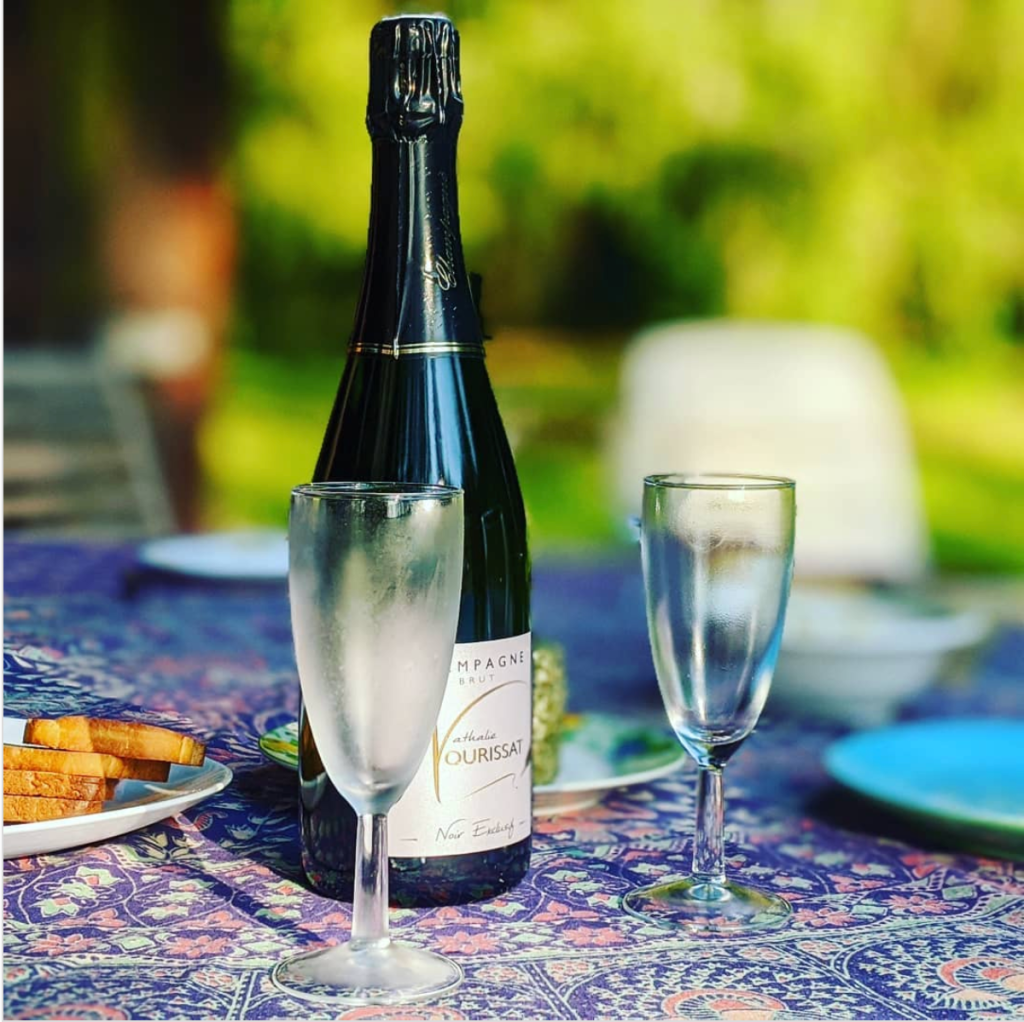
Enough said. This is, of course, up to you. Just sayin–this year the vignerons of France could use your help.
I have not said anything about what is going on in my home country. Suffice it to say it is deeply concerning, and it makes me both sad and worried. Most Americans abroad can send their votes back home very soon if they not already been able to do so. I am hoping that a massive voter turnout will make a difference, and will help us take the first steps toward getting to a better place than we are as a nation right now.
Stay safe everyone. Wear those masks, keep those distances, wash your hands, don’t touch your face.
Prenez soin de vous!
Janet Hulstrand is a writer, editor, writing coach, and teacher of writing and of literature who divides her time between the U.S. and France. She is the author of Demystifying the French: How to Love Them, and Make Them Love You, and is currently working on her next book, a literary memoir entitled “A Long Way from Iowa.”
 Writing from the Heart, Reading for the Road