Posts filed under ‘About Essoyes’
Shuttling between Paris and Champagne
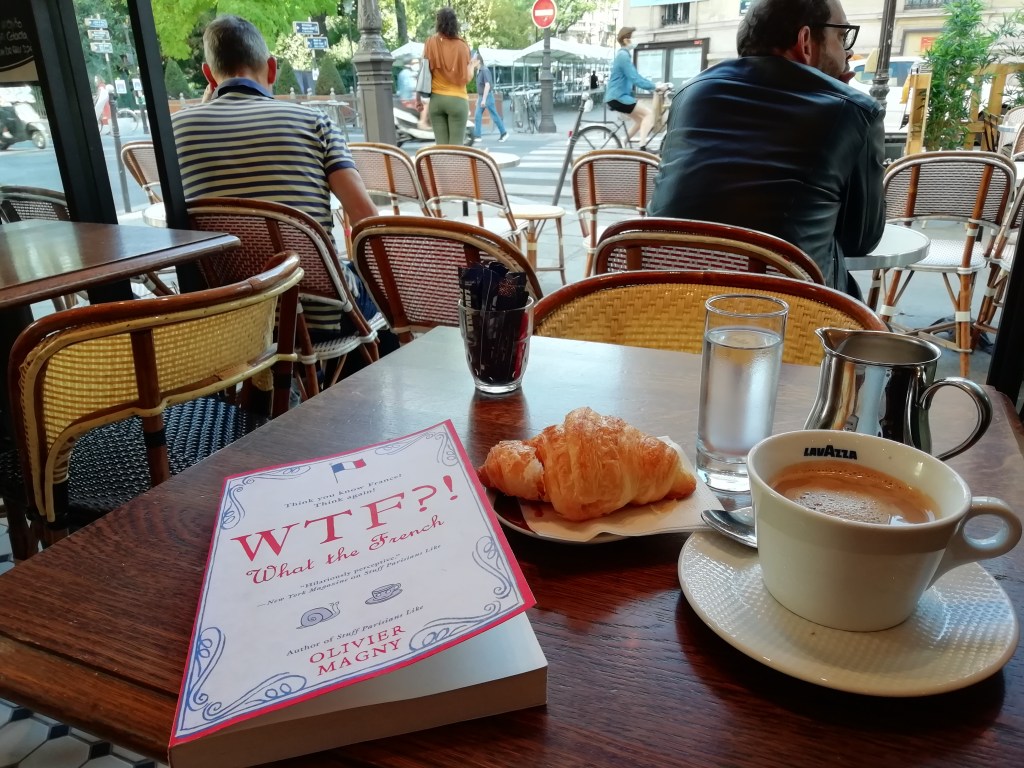
I’ve been lucky enough to be shuttling between two of my favorite places in France (and I guess therefore in the world) this month: Paris, and “my” little village of Essoyes in Champagne.
It’s only about 2 1/2 hours from Paris to Essoyes, and I usually do most of that trip by train, either from Troyes or Vendeuvre-sur-Barse. So it really can be done as a day trip, and occasionally I have done that, for example to attend my friend Adrian Leeds’s Après-Midi meetups in the Marais. My timing was lucky this month, in that I was able to attend the first in-person Après-Midi to be held at the Café de la Mairie since the lockdown began last spring.
Adrian has been conducting Zoom meet-ups since May: this time the guest speaker was the wonderful Cara Black, who was talking about her latest book, Three Hours in Paris, which is a thriller set in 1940, in newly-occupied Paris. Cara lives in San Francisco and was not able to come to Paris as planned (because most Americans–understandably–aren’t allowed into France for now 😦 ), but she got up at 6:00 in the morning so she could Zoom with us for our afternoon meeting. Her new book is fascinating! It deals with the (historical) fact that when Hitler came to Paris in June 1940, he left again quite suddenly, abruptly, and inexplicably. Why did he do that? was what Cara wondered, and from that wondering she has created a fascinating novel about an American woman, a sharpshooter from Oregon, who is assigned the task of attempting to assassinate him.
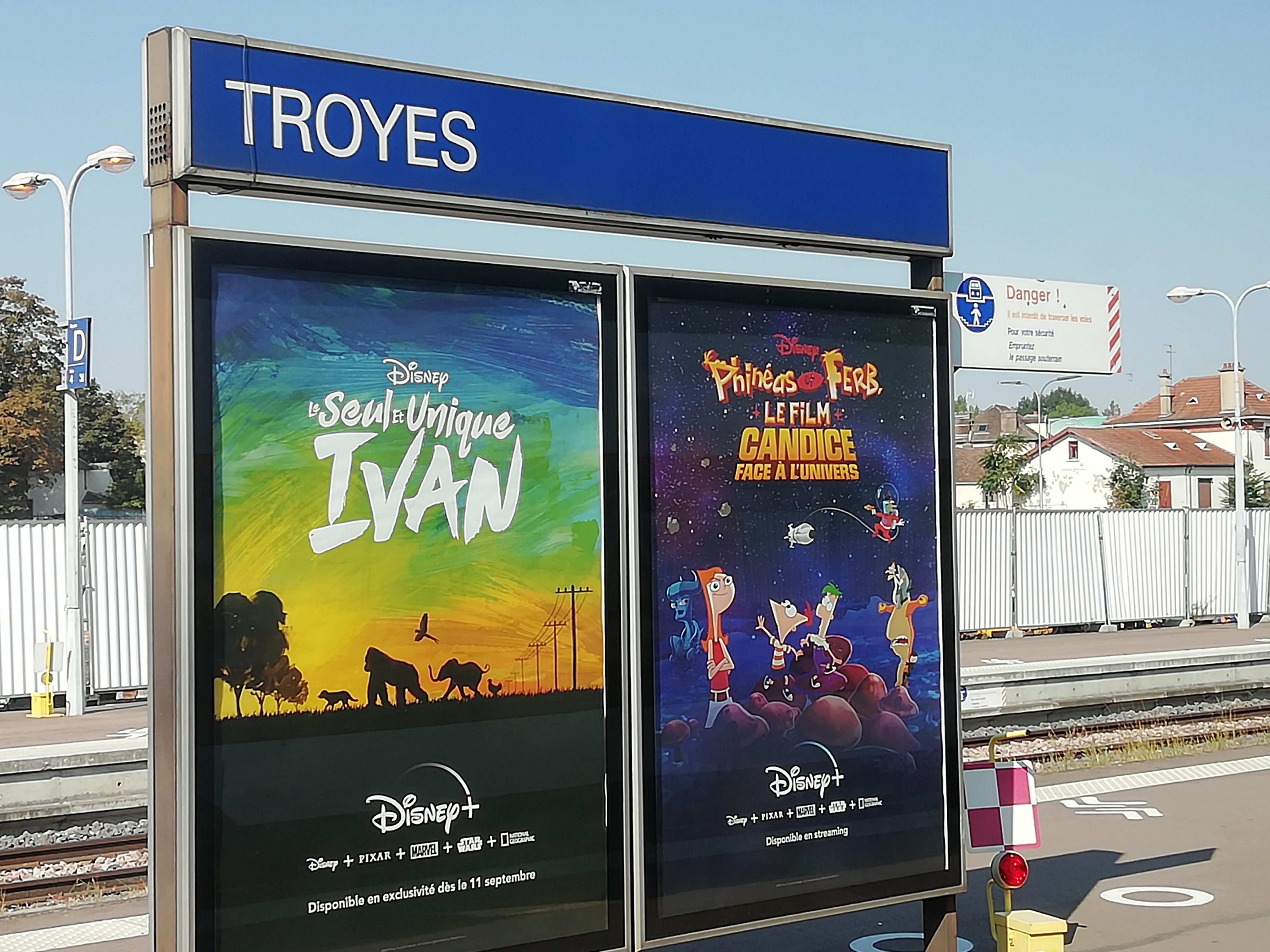
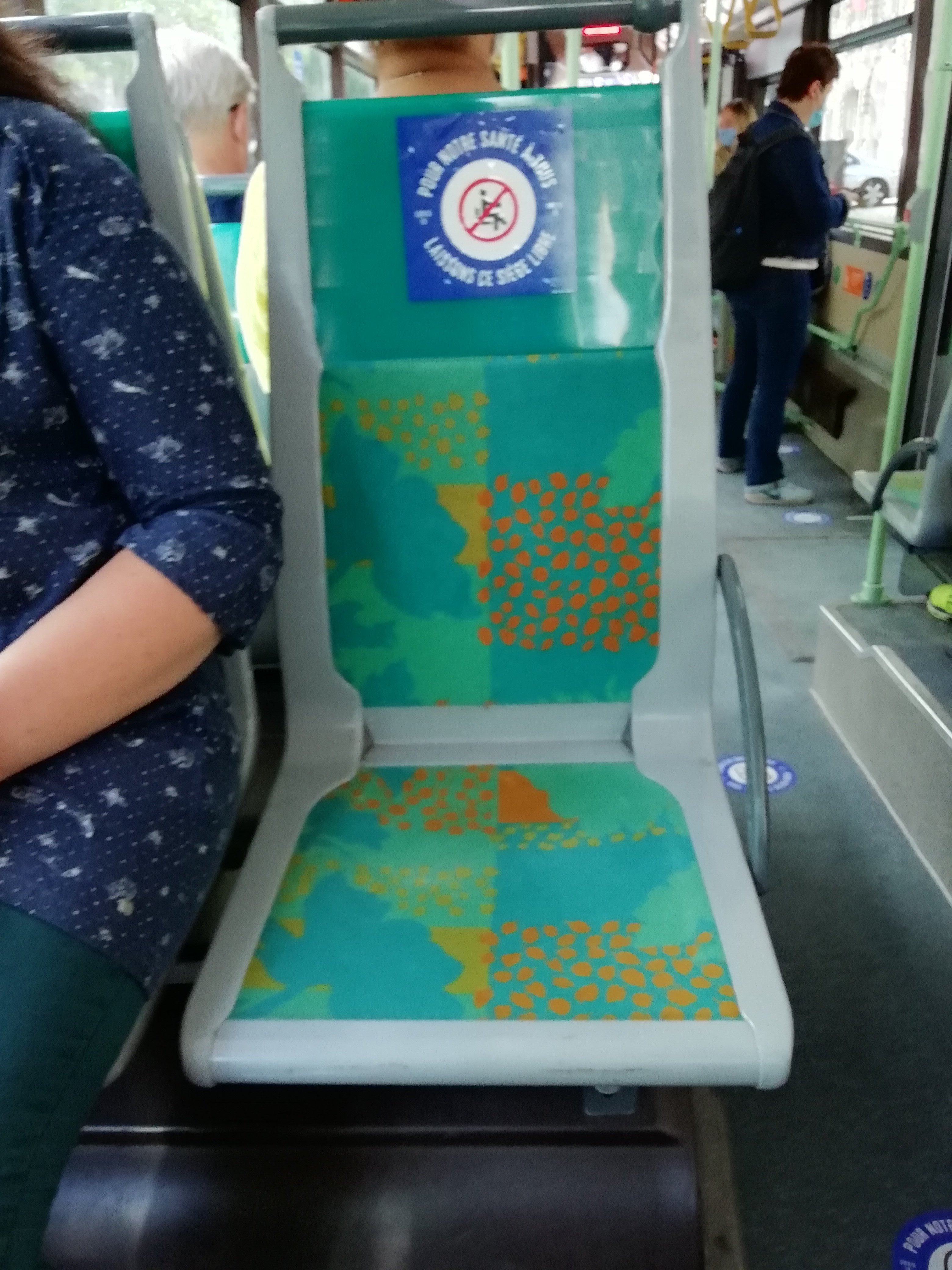
It is always good to be in Paris, and September is a particularly fine time to be there. Everyone is back from wherever they had gone this summer and (almost) everyone seems to be adjusting to the new rules for wearing masks, keeping physical distance from each other, and observing les gestes barrières. Most people are wearing masks, and most of them are wearing them correctly. (The most common infraction is not covering the nose–not good enough, people!) Consequently, it is not an infrequent sight to see two friends encounter each other on the street, one of them walk right by the other one, and then stop short, turn around, and say, “Oh, I didn’t know it was you!”

On one of the days I was in Paris I was stuck inside working on a project I needed to do. It was a gorgeous day outside, I could see that, but I wasn’t out in it, enjoying it. Then I began to think about various things that were concerning me, and before not too long I had slid into a not very positive state of mind.
So I decided to pull myself together, and “snap out of it.” I got my work project to the place I had promised myself I would; I went off to the pharmacy to pick up a prescription I needed; and then I found a table at a sidewalk cafe, where I ordered a kir, and then just sat there for an hour, watching the world go by.
There are very few of the mundane worries in life that can’t be made better by spending an hour just sitting in a Parisian cafe, with a cup of coffee or a glass of wine. And so that is what I did. And it worked!
In Essoyes, the vendange has come and gone. It’s not saying anything new to say that 2020 has been a challenging year for almost everyone around the world. And that goes for the vendange as well.
I’ve written about the vendange in Essoyes in the past, for example here and here. There are good years, and there are bad years: this was NOT a good year for my friends and neighbors who make champagne. After a very hot, dry summer the harvest was both early and short–it began during the third week in August and was over before September 1, for most vignerons only about 8 days I think. Our friend from the pressoir in Essoyes came by to say a quick hello after it was over, and explained some of the reasons that “we’re all going to lose money this year.” The drought was one problem; COVID was another. There were others too, too complicated to go into here.
So the vignerons are hoping (fervently) that people will buy champagne. The sooner the better; the more, the better. You don’t need to wait for the holidays. Or a graduation, or a wedding. (One of the problems, of course, is that so many of those events have had to be cancelled this year.)
So why not just celebrate the fact that–so far–you have come through the pandemic and are still here to enjoy champagne? Vignerons work hard–very hard!–throughout the year, and this year especially, they need our support.
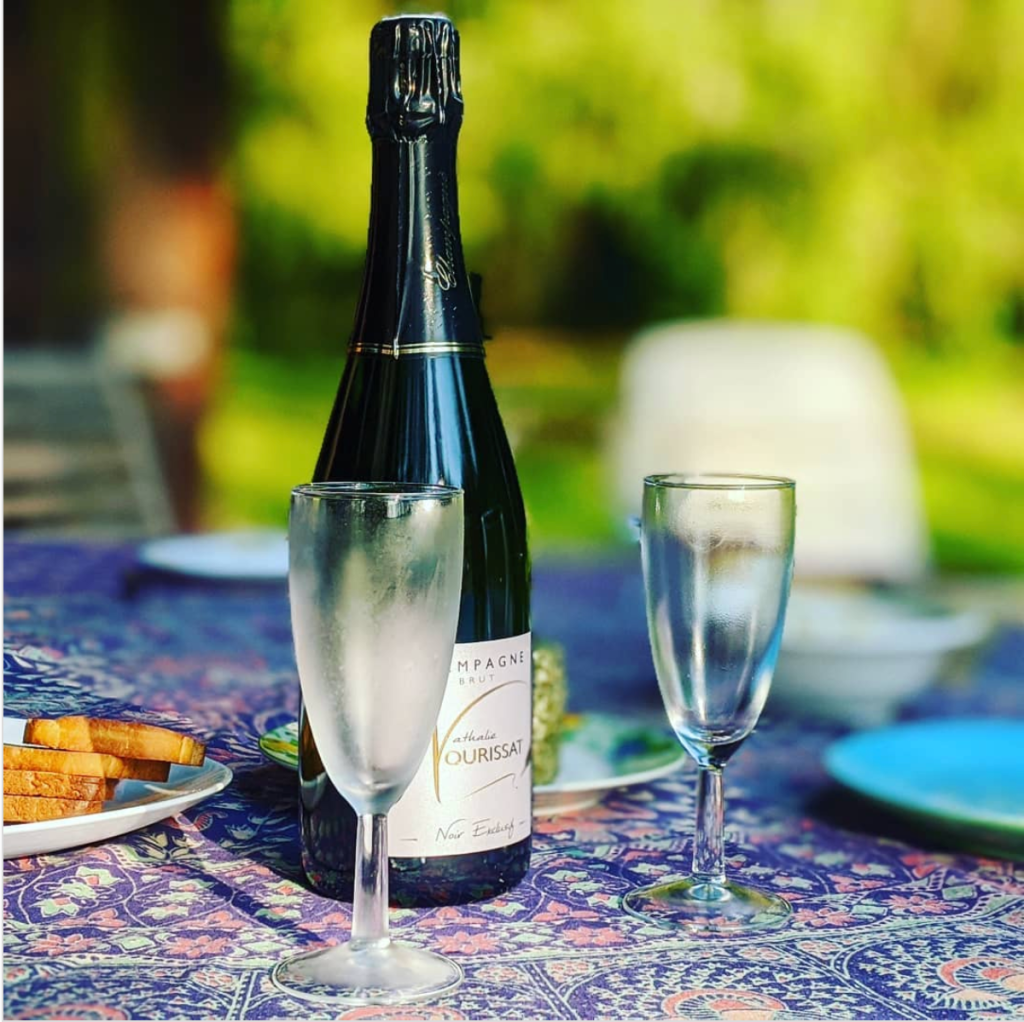
Enough said. This is, of course, up to you. Just sayin–this year the vignerons of France could use your help.
I have not said anything about what is going on in my home country. Suffice it to say it is deeply concerning, and it makes me both sad and worried. Most Americans abroad can send their votes back home very soon if they not already been able to do so. I am hoping that a massive voter turnout will make a difference, and will help us take the first steps toward getting to a better place than we are as a nation right now.
Stay safe everyone. Wear those masks, keep those distances, wash your hands, don’t touch your face.
Prenez soin de vous!
Janet Hulstrand is a writer, editor, writing coach, and teacher of writing and of literature who divides her time between the U.S. and France. She is the author of Demystifying the French: How to Love Them, and Make Them Love You, and is currently working on her next book, a literary memoir entitled “A Long Way from Iowa.”
The lovely ringing of the bells in France…
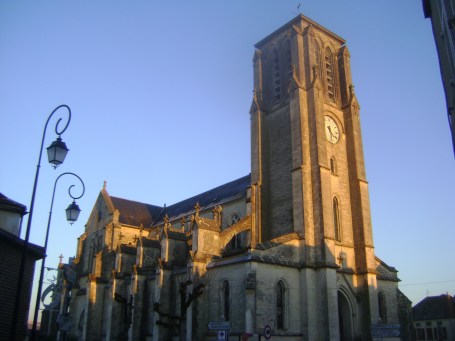
I have in the past mentioned how much I love the ringing of the church bells in France generally, and in particular the ringing of the church bells in “my” little village in Champagne.
I have also promised to expand upon this topic someday, and I have chosen today as the day to do that.
Before beginning I should probably say that there quite a few questions about this topic that I don’t yet know the answers to. And so I would invite anyone who can provide additional perspective or knowledge on the subject to please feel free to do so by commenting below.
Some of the things I wonder about are 1) Why recently the church bells in our town are ringing much more frequently than they used to–for example, every Sunday morning, not just the Sunday mornings when a mass is being celebrated here. It seems to me this started sometime into the period of confinement, or it might have even been during the beginning stages of déconfinement. In any case, lately, every Sunday morning, usually around 10:30 the bells begin to peal and they peal for a lovely 10 minutes or so. And then they peal again, maybe about 45 minutes later. 2) I would like to know how to learn more about the various patterns and meaning of the ringing. I have learned to recognize the tolling of the bells calling mourners to the church before a funeral, and I have been told that the ringing of the bells at 7 am and 7 pm each day is called “Angelus,” and that it is an ancient pattern of bell-ringing that is a call to prayer for Catholics, to pray a particular prayer commemorating the incarnation of Jesus, which includes a Hail Mary.
Before starting to write this post I looked to see who else had written on this topic to learn what I could from them. I did so a year or so ago and found this really interesting post written a few years ago by an Australian woman. I find this post interesting for the perspective and information she received from locals in the village where she was vacationing, when she asked the about the patterns of the ringing of the church bells there.
This time I found another post, this one by an American woman, also written a couple of years ago. I found this post interesting for the change of opinion this woman experienced when she first encountered the very frequent (and quite loud) ringing of the church bells in the French town she was vacationing in.
Like many people, at first she found the ringing (which continued through the night) annoying. But eventually she came to appreciate it to the extent that she actually missed the ringing of the bells when she had returned home to Huntington Beach, California.
I have never been bothered by the ringing of the bells; au contraire. I should probably add that like the husband of the woman from California, sleeping through innocent ambient background sounds is not a problem for me: therefore, the sound of bells ringing through the night does not interfere with my peaceful slumber.
But, as the Californian woman herself eventually came to feel, I find the regular ringing of the bells–not just on the hour, but on each quarter-hour also–to be comforting/grounding/orienting in a deep and fundamentally human way.
I think perhaps what bothers many people about this bell-ringing is that it is a regular and–some might feel unwelcome–imposition of the outside world into each of our individual private worlds–the one that exists in our minds. And I will readily admit that it indeed does do that.
However, far from resenting this imposition, I find it a very healthy and pleasant reminder that my own internal world, much as I value, respect, and protect it from all manner of unwelcome outside intrusions on a pretty much constant basis, does exist within a much larger world–a world formed by a local, national, international human community. In that regard, I find the ringing of the church bells, though an imposition, unlike many of the sounds that surround me daily in the 21st century, a very welcome one.
I am not a Catholic, but I feel lucky to be included in the daily reminders that Catholic churches around the world offer all within hearing that there is a power greater than and outside ourselves that we can benefit from remembering and calling upon, if we so desire; that we are surrounded by people, not only in our own local communities, but around the world who have a need for and appreciation of such reminders; and that whether we choose to listen to them or not, to appreciate them or not, these church bells, with their lovely musical sounds, will go on ringing through all manner of the chaos, worry, and strife that also surround us constantly.
I was going to say that they ring on “no matter what.” But in fact, I learned through my recent research, that the bells of France did stop ringing during World War II, from the time of the Occupation of the country until the moment of its liberation nearly five years later. That silence surely must have been a sad absence of sound for the French people: and the return of the ringing of the bells when they finally sounded again, incredibly joyful.
I wish I could share with you with the lovely sound of the ringing of the church bells in Essoyes, but my audio tech skills are just not there yet. So instead I will share with you the ringing of the bells from Sacre Coeur in Paris from a few months ago. Although one of the joys of church bells in France is that they do not all sound exactly the same, not at all; yet, in a general way, the sound is quite similar. And to me at least, deeply comforting.
Stay safe, stay well, everyone. Wear those masks, wash those hands, prenez soin de vous…
Janet Hulstrand is a writer, editor, writing coach, and teacher of writing and of literature who divides her time between the U.S. and France. She is the author of Demystifying the French: How to Love Them, and Make Them Love You, and is currently working on her next book, a literary memoir entitled “A Long Way from Iowa.”
Drought, and wasps, and COVID, oh my!
I do not like to dwell on the negative, so this post is probably going to be rather short, and lacking in detail 🙂
Let’s just say it has been a better summer for wasps and a certain very nasty virus than it has been for some of us.
On the other hand, the “some of us” I am referring to are still very richly blessed compared to most people on this suffering planet of ours. And the annoyances we have been dealing with this week are really just annoyances. They are not tragedies, they are not catastrophes, they are not even illnesses.
People who are dealing with annoyances rather than catastrophes or tragedies or illnesses are by definition lucky people. And so, I am going to try not to complain.
Not even about WASPS!!!! (French lesson of the day: guepes: obnoxious little beasts in any language, grrr… 😦 )
By way of focusing on the positive I’ll mention that my sons and I enjoyed another very fine meal at La Guingette des Arts in Essoyes this week.
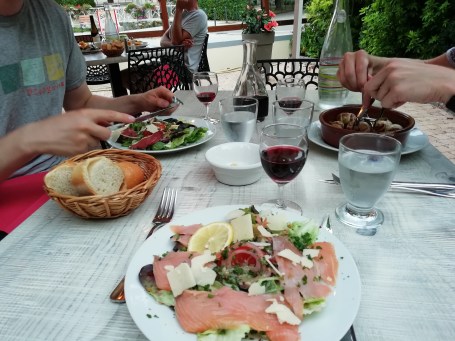
Also, the vendange begins sometime this week, which always brings extra excitement to the villages around here.
I don’t think it’s been a very good year for the farmers around here either, though. Vignerons and everyone else too… 😦
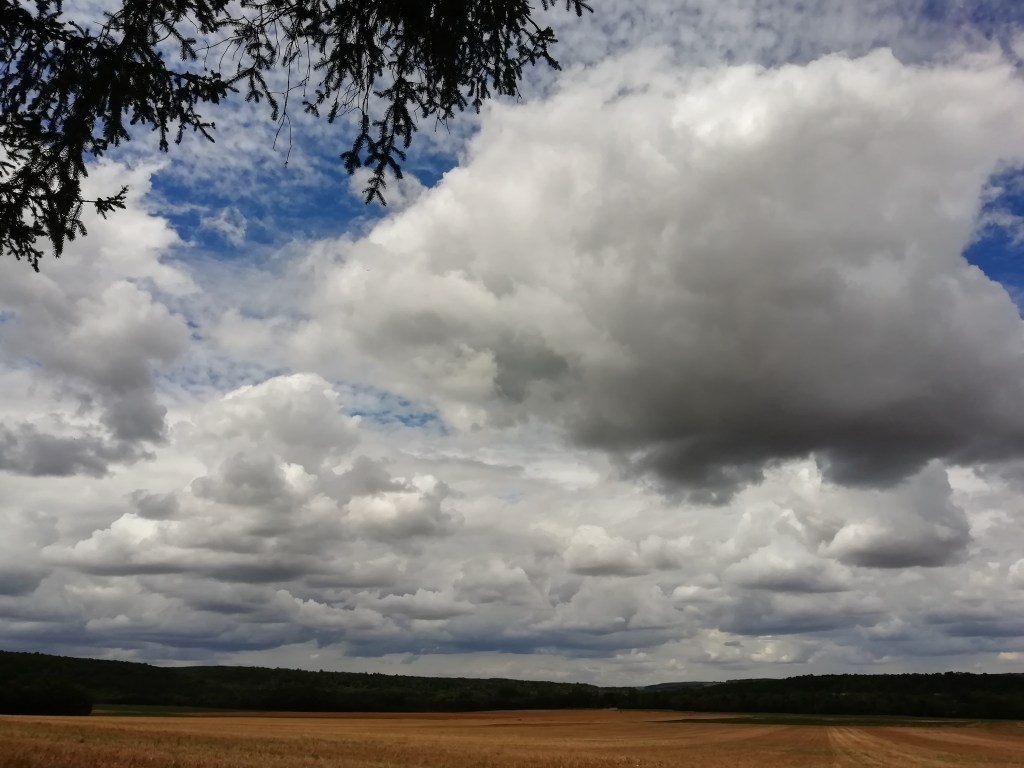
It is just too dry.
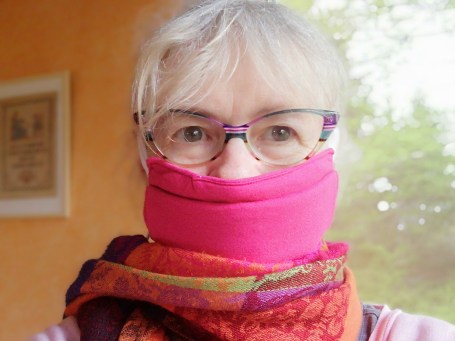
Well lest I continue carrying on in this vein, let me close with another positive thing. And that is my lovely pink mask, my favorite one, which was lovingly made by local volunteers during the period of lockdown last spring for the citizens of Essoyes. And since it looks like we all will be wearing our masks even more than before, it is nice, very nice, to have such a pretty mask to wear.
So merci beaucoup de nouveau, aux ces braves benevoles anonymes d’Essoyes qui ont fabriqués ces beaux masques pour nous. Your generosity is uplifting.
In a time when such things are very welcome.
Janet Hulstrand is a writer, editor, writing coach, and teacher of writing and of literature who divides her time between the U.S. and France. She is the author of Demystifying the French: How to Love Them, and Make Them Love You, and is currently working on her next book, a literary memoir entitled “A Long Way from Iowa.”
Summer in Essoyes
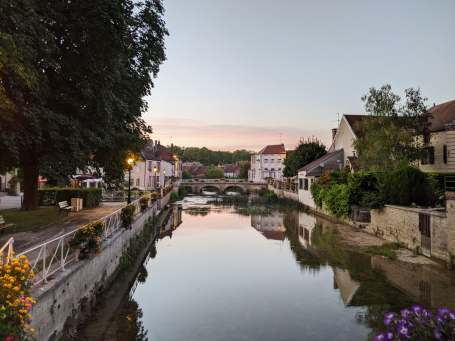
I don’t really think of Essoyes as a tourist town, but it is, among other things, a wonderful place for tourists to visit. This is partly the legacy of Alain Cintrat, who has just ended 20 years of public service as our mayor, and partly the legacy of his mother. Of course there were many other people involved in making their dream of memorializing the history of the Renoir family in Essoyes come true; but if not for their dedication and determination over a period of many years, it would probably not have happened.
In any case, it did happen, and as a result Essoyes has become a lovely and very interesting place for tourists to visit, along with the many other lovely villages in this part of southern Champagne, very near the Burgundian border.
So it was that, just before the quatorze juillet, I noticed that the village square was suddenly full of cars, the physically distanced lines outside the bakery and in our little grocery store were longer, and there were lots of tourists strolling through the town. (You can tell which ones are the tourists: they are the ones wearing sporty casual vacation wear, walking at a very leisurely pace through the streets of the town, rather than on the sidewalks. This is irritating only when you are trying to drive a car through those narrow streets, but it is irritation tempered by the knowledge that having tourists come here is a good thing for Essoyes. It is…)
The rate of COVID cases has begun to tick up in France again, and France is responding. Everywhere you go there are signs reminding people what they can, and in some cases must, do to help protect themselves and others, and slow the rate of infection. In Essoyes, starting in August there will be testing available once a week in the community center. And everyone is hoping that, if everyone continues (or begins!) to follow the recommended guidelines for containing the virus, we can avoid a second wave that would be worse than the first. I suspect health care workers are hoping that more than anyone, let’s try to help them out with that, everyone, shall we?
And so, life has returned more or less to normal–well, to the “new normal”–at least for now. For our family that means raspberry tartes for July birthdays–and we celebrated two of them in our home this month.
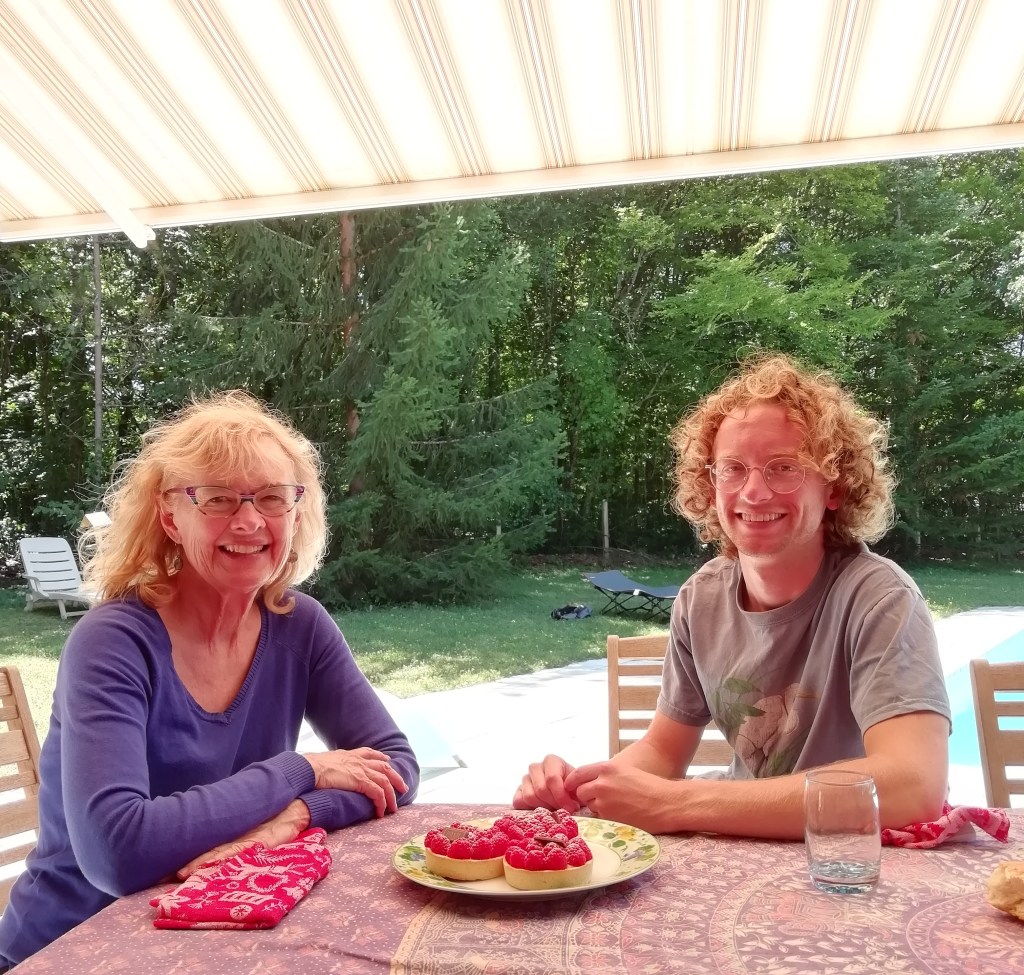
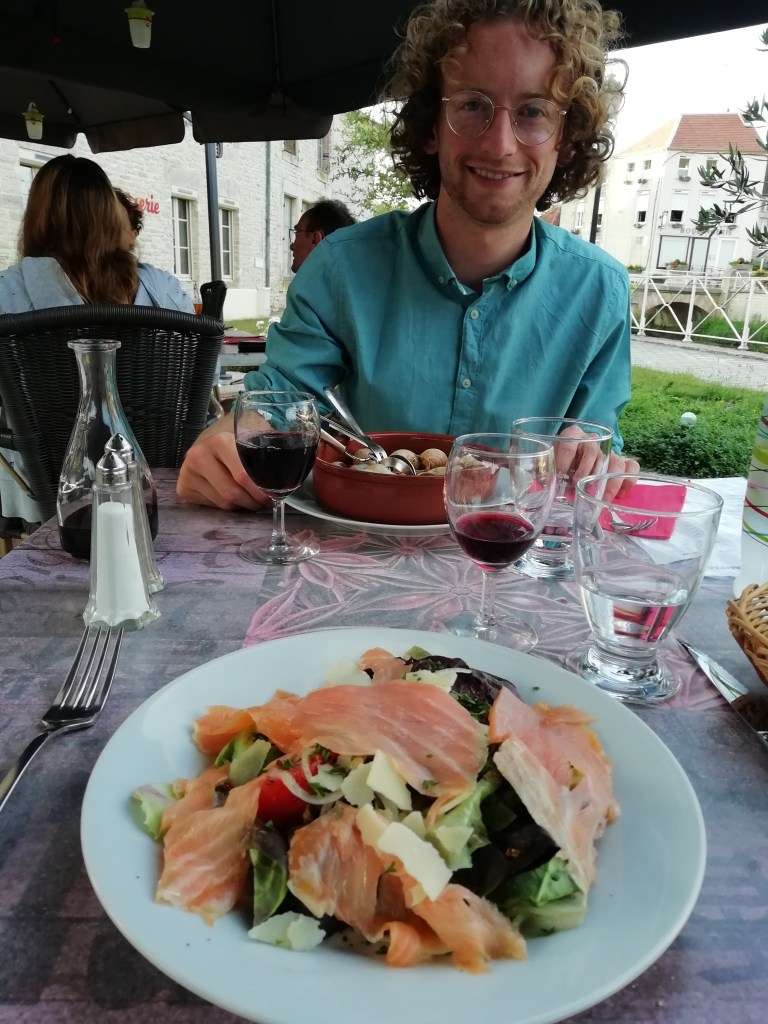
The tartes at lunch were followed by a delicious meal at La Guingette des Arts, on the banks of the Ource River, which flows through the center of Essoyes. (The photo at the top of this post, by the way, taken by “the birthday boy” that night, is not retouched. Believe it or not!) And here’s a photo of him enjoying his escargots at La Guingette.
There will be an organ concert in the church in Essoyes this weekend. How exciting is that? (After nothing happening in the churches for such a long time? Very!)
Wishing everyone a safe, happy continuation. Stay well. Stay safe. Prenez soin de vous.
Janet Hulstrand is a writer, editor, writing coach, and teacher of writing and of literature who divides her time between the U.S. and France. She is the author of Demystifying the French: How to Love Them, and Make Them Love You, and is currently working on her next book, a literary memoir entitled “A Long Way from Iowa.”
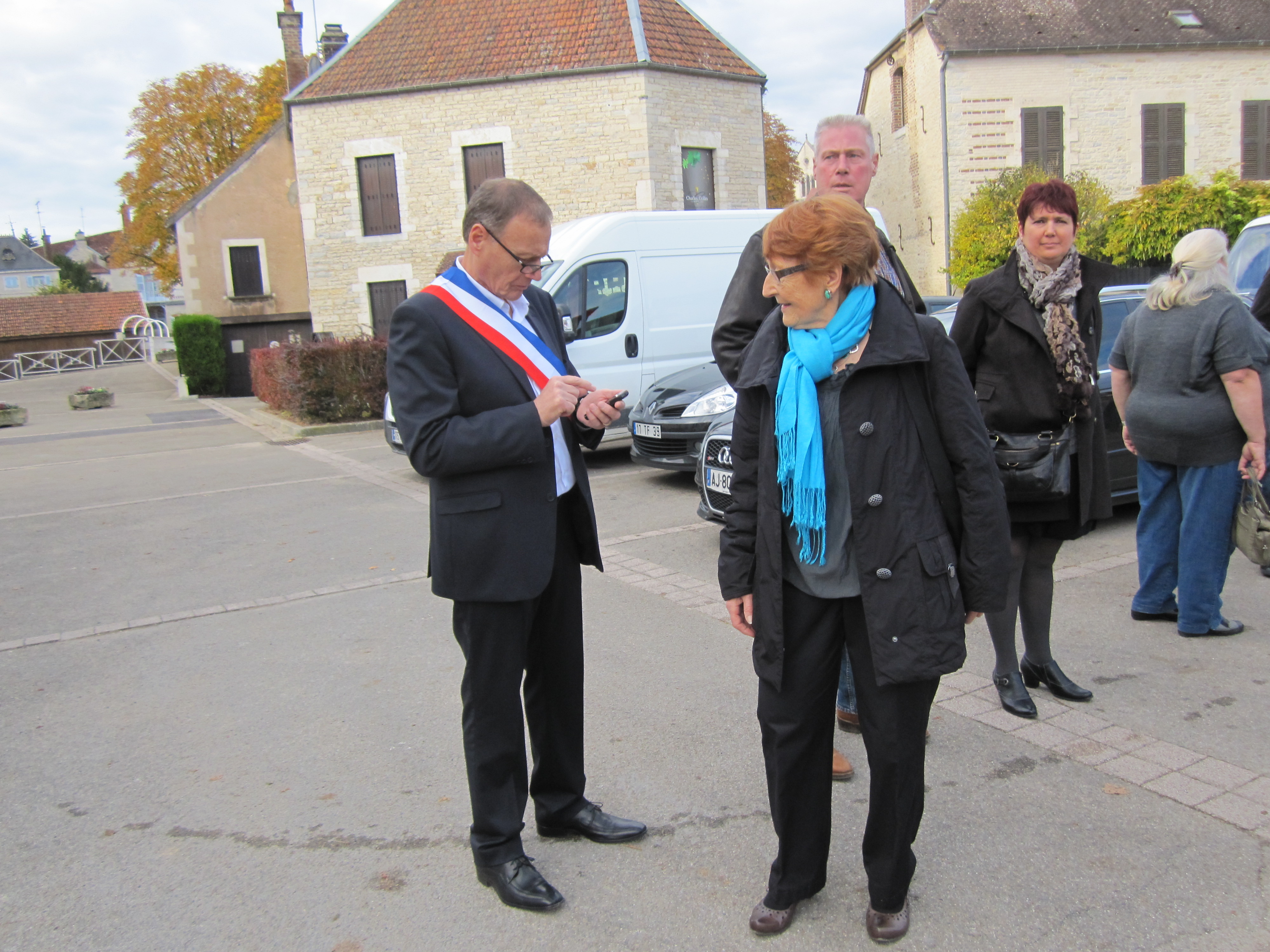
Merci, M. le Maire d’Essoyes




Janet Hulstrand is a writer, editor, writing coach, and teacher of writing and of literature who divides her time between the U.S. and France. She is the author of Demystifying the French: How to Love Them, and Make Them Love You, and is currently working on her next book, a literary memoir entitled “A Long Way from Iowa.”
Bastille Day in Essoyes 2020
…In France this holiday is called “la fête nationale” or, more commonly, le quatorze juillet. This year, as usual it started on the evening of the 13th of July…
Déconfinement Day 17: France Slowly Reopens
In a small rural village, like where I live now, at this time of year crops become a matter of general interest. Even if you’re not personally involved in agriculture, you can’t help but notice the growing and thriving of things….
Lockdown in Essoyes: Day 49
…May 1 was a national holiday in France, as it in many countries, as a day of international honoring of workers. But of course, with everyone still confined to their homes it was a pretty quiet celebration this year…
Lockdown in France, Day 35
Last week I was gathering dandelions in our yard, which is wonderfully full of dandelions. Because (did you know this?) dandelions are NOT weeds, they are very useful plants with a host of healthful options to offer us, everything from salad, to tea, to dandelion wine. They also are very important for bees, and bees are important for US. (So, not to go off on this tangent: but if you are still killing dandelions, please STOP KILLING DANDELIONS!!!!)
This week was different: a couple of projects had me busy at my computer. And then, toward the end of the week, everything got a bit complicated. First, I fell (on my face–again!) on my nightly .5 kilometer walk across the field.
I say “again” because I pulled a similar trick about a year ago in Paris. I am tempted to call this my annual “spring fall” except I am really hoping it is not an annual thing. (That time in Paris I landed on asphalt. This time I landed on gravel. There are interesting differences to note, but I will spare you the details…)
Anyway, I was pretty sure that I had also fractured my ankle again. But, hallelujah, and long story short, I did not! It is getting better WAY too fast for that to have been the case, and today our village doctor confirmed that it is not broken, not even fractured, pshew. And, in general, this was a much less serious fall for a number of reasons I won’t go into either…
Then my chest started to hurt. Oh, for goodness sake, now what? Do I call the doctor? thought I. Surely he has more urgent cases on his hand; surely I should wait at least a few days and see if it gets better.
Which I did. But then it didn’t get better, it got worse. And it kept kind of getting worse and worse…So I started doing the required internet research, and read enough to think that probably it was prudent to at least call him, describe my concern, and see what he said.
Another long story short, he came here, checked all my vital signs (and my ankle), gave me a couple of prescriptions to ease the pain in my chest, and ordered a COVID test. (Which the village nurse came and performed here in our home.)
I’m not the first one to say it, but these people are heroes. They are. Let’s all remember that “when this is over…” and make sure they are appropriately rewarded for their brave, humanitarian service. And I mean really rewarded. More than just heartfelt thank-yous, nice as those are…
So, we shall see what we shall see. The test has been taken, the verdict is out. The medicine is making me feel a little bit better and I am forcing myself to take it easier, and rest more than I accustomed to doing.
My younger son is here with me, he is a wonderful musician, a wonderful young man, and a much better cook than I am. And he is taking such good care of me.
And so, that is my report for this week. Very personal, very self-centered I suppose. Except I want to note that the heroes of this post are, once again, those health care workers (and others) who are out there every day helping us get through this.
All the rest of us have to do is PLEASE just do what they say. Which is mainly: STAY HOME! (And enjoy it…why not?) 🙂
Take care of yourselves, and stay home for the sake of OTHERS as well. as yourselves..and be well…until next week…
Janet Hulstrand is a writer, editor, writing coach, and teacher of writing and of literature who divides her time between the U.S. and France. She is the author of Demystifying the French: How to Love Them, and Make Them Love You, and is currently working on her next book, a literary memoir entitled “A Long Way from Iowa.”
Lockdown in France, Continued…
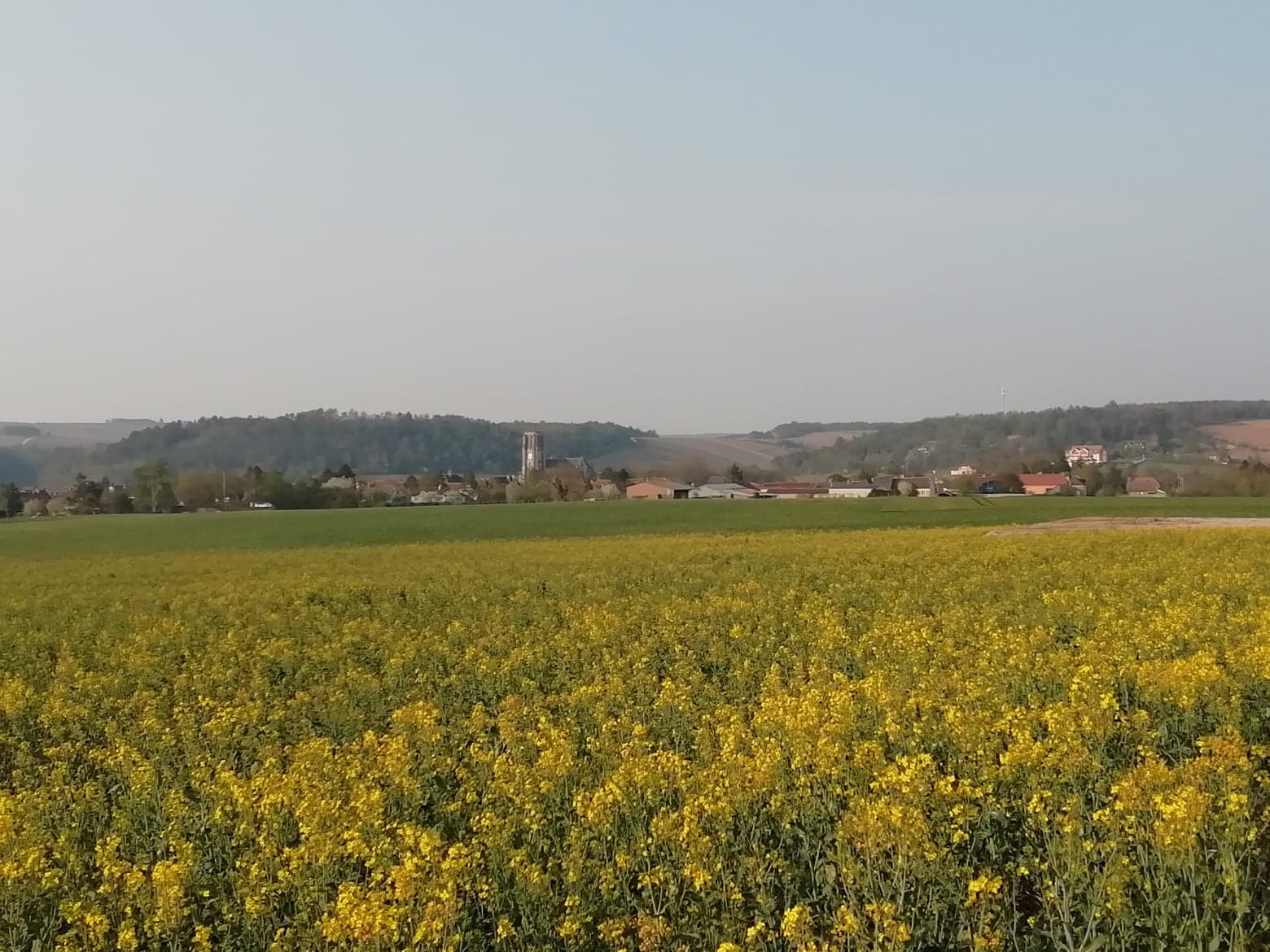
The colza is in bloom…Photo by Janet Hulstrand
I love our home in Champagne, and I love living in our quiet, but busy, little village, Essoyes, here in the Côte des Bars.
And it’s a good thing that I love spending time here: because I will not be going anywhere except to the village and back on my daily walks until at least May 11.
I feel so lucky, and so grateful, to be here during this time.
Last week was Holy Week. And although there could be no church services this year, on Palm Sunday at noon the bells in our church rang out joyfully.
On Maundy Thursday at 7:00 in the evening they rang again, this time solemnly.
And on Easter Sunday they rang joyfully again at noon.
Every night the citizens of Essoyes continue to flood the town with music at 8:00 pm as their way of thanking those who are continuing to provide essential services during the lockdown. They are beginning to vary the song: last night this song was played, in homage to a family member of several Essoyens who died yesterday, and whose funeral mass could not be largely attended because of the confinement.
The night before this was the song selected for sharing in the streets of Essoyes.
Crayons and line drawings were distributed to the children of the village the week before last, and last week the resulting artwork was displayed around town in the windows and on the walls of the businesses that remain open, and at the mairie. A nice (and appropriately educational) activity for the children, and a cheering sight indeed for all.
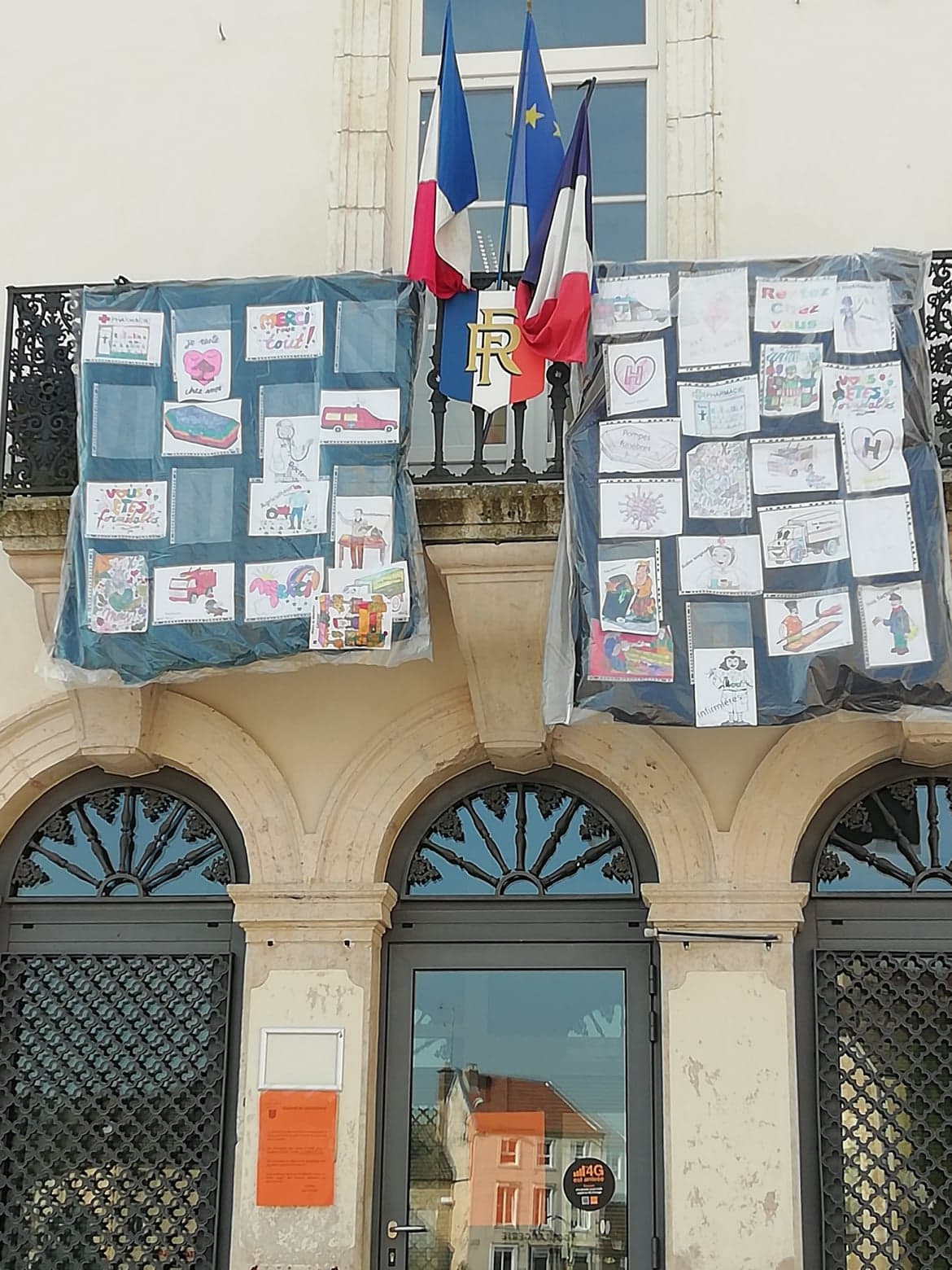
The mairie and some of the businesses in the village are displaying artwork celebrating “nos heroes quotidiennes” created by the children of the village…
Last night my son and I, along with millions of Frenchmen and women, watched and listened carefully to President Emmanuel Macron as he outlined the steps ahead for France as the country attempts to gain control of the coronovirus epidemic, and slowly begin a return to normalcy.
The main points were: France will continue to remain on strict lockdown until at least May 11. The borders will be closed to entry from non-EU countries until further notice. The French government is doing, and will continue to do everything it can to preserve both the lives and health of its citizens, and to find ways to address the inevitable economic consequences of this situation, and help those who need help.
Like his previous speeches during this crisis, Macron was calm, clear, and very candid (“…we still have several months of living with this virus..”). He started by praising all those who have worked tirelessly, unselfishly, bravely to attempt to defeat this thing. He urged everyone to continue to take the rules of confinement very seriously. He emphasized that although the period of confinement has been moderately successful in slowing down the advance of the disease, the epidemic is not under control, and that the continued vigilance of everyone is essential in order for this goal to be achieved. He explained some of the concrete actions the extended period of confinement will allow the government to put into place in preparation for a slow return to normalcy, including the provision of masks to all who want them and the amassing of a sufficient number of tests, so that after May 11 those who show symptoms of the disease can be tested. He stressed that both public and private resources have been aggressively mobilized to work together to adequately address this crisis.
And he said that as of May 11 there will be an attempt to begin to return to normalcy, step by step. Progressively reopening the schools, beginning in the primary and secondary levels, will be among the first steps, as he explained, because “…there is an inequality in that there are those who don’t have access to the internet and can’t be helped by their parents.” This is only a tiny step toward addressing all of the many inequalities that really need to be made, of course. But it is a step in the right direction. One can only hope (and work together to demand) that this priority does not get lost sight of once things are more or less back to normal again.
I hope I have more or less accurately summarized what he said. Here is the video of the speech, and the entire speech in French, along with a summary of the highlights.
What was most comforting about this speech in addition to the calm intelligence throughout was the humility, the transparency, in other words the honesty of the president as he spoke to the nation. He who has been criticized for having a “Jupiter” complex was also uncharacteristically humble last night. (“We have to reinvent ourselves, and me first of all … We are vulnerable. I understand you have many questions and I would like to answer all of them. But I say in all humility, we don’t have definitive answers today.”)
I hope with all my heart and soul every day, along with many millions of my fellow Americans both at home and abroad, that something similar can begin to happen in the United States as soon as possible. I know that millions of U.S. citizens, and many of the state’s governors are doing all they can to prevent an even greater tragic loss of life than has already been suffered there. I hope that those leaders who have not yet joined them will do so soon. As soon as possible. It is hard to imagine what they are waiting for…
Meanwhile, in Essoyes, as elsewhere around the world, the coming of spring gives reason for hope.


Stay well, everyone. I’ll be back next week with another report. Until then, as they are saying here these days…Prenez soin de vous…
Janet Hulstrand is a writer, editor, writing coach, and teacher of writing and of literature who divides her time between the U.S. and France. She is the author of Demystifying the French: How to Love Them, and Make Them Love You, and is currently working on her next book, a literary memoir entitled “A Long Way from Iowa.”
 Writing from the Heart, Reading for the Road