Posts tagged ‘France’
Demystifying the French, via Zoom!
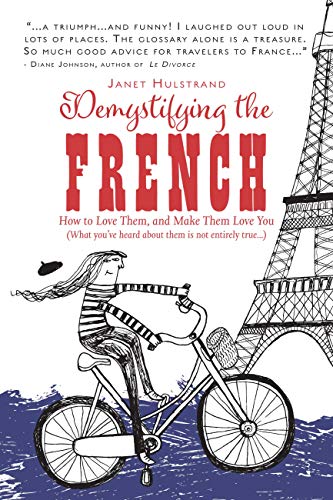
Today’s the day! I’ll be chatting with Jennifer Fulton, of the wonderful Bonjour Books DC today at 11 am Eastern Standard Time, about Demystifying the French. Want to join us? Here’s the link!
Janet Hulstrand is a writer, editor, writing coach, and teacher of writing and of literature who divides her time between the U.S. and France. She is the author of Demystifying the French: How to Love Them, and Make Them Love You, and is currently working on her next book, a literary memoir entitled “A Long Way from Iowa.”
The Other Bonjour Effect…


Many people, including yours truly, have written about the importance of starting any social (or commercial, or casual) interaction in France with the word “Bonjour,” ideally followed by “monsieur” or “madame.” (The great Polly Platt, author of French or Foe? told her readers that “the form is rigid.”) In the first chapter of Julie Barlow and Jean-Benoit Nadeau’s excellent book, The Bonjour Effect: The Secret Codes of French Conversation Revealed, the authors explain thoroughly, and very interestingly, the reasons for why this is so important. (The chapter title gives an intriguing clue to one of the reasons: “I Greet, Therefore I Am.” )
I often explain to my students that in France, this obligatory and very pro forma greeting also carries the implication that “I am greeting you, therefore you exist too!” And in my book, Demystifying the French, I sum up the importance of saying bonjour to everyone you encounter as being “just part of treating someone like a human being in France.”
Unfortunately, failing to do so can also be seen as a way of dismissing, ignoring, or insulting your fellow human beings.
So. Not knowing this rule often causes unsuspecting and unaware-of-this- rule Americans (and I suppose other foreigners) in France a lot of trouble. It is a trap constantly waiting for us to step into; and time and time again, we do. I continue to do so now, even though I know very well how important it is. (In Demystifying the French, I give some advice about what to do when you inevitably forget, and how to repair the damage.)
And while many of us foreigners therefore view this very strict rule of French etiquette—as well as others–as something of a nuisance, these niceties do have their benefits.
About a year ago, my son and I had been invited to a post-grape-harvest celebration by our friends who own the pressoir in our village. As we approached the pressoir I explained to my son that it is expected on arriving that you greet everyone who is there with either a bise (the famous French air-kiss, cheek to cheek), or a handshake. (And yes, it is not always easy to know which of these two forms of greeting should be used: but for now, it doesn’t matter because of COVID. Because we are not supposed to be doing either of these things for the time being…the President of France has said so!)
In any case, my son said, “Really?! Every person there?” “Yes,” I said, as I ignored his incredulous look, and steeled my reserved, Scandinavian Midwestern self for the ordeal.
On arriving I took a deep breath and held out my hand, or offered my cheek to each person I encountered on the way inside, following the cues they offered. My son followed me inside, gamely playing along.
Later in the evening, a perfect stranger came over to us and shook our hands, and offered us a friendly Bonsoir as he made his rounds of the room. After he had (quickly) moved on, my son looked at me and said, “Well. I can’t do it myself. But it is kinda nice…”
Indeed it is “kinda nice,” to be acknowledged as a living, breathing human being, by other living, breathing human beings, once you get used to it.
Last week I had another surprisingly moving experience with the bonjour effect. I had to have surgery for cataracts. It’s kind of a scary thing to have surgery on your eyes, really, no matter how much you trust the surgeon. I did trust my surgeon, and the anesthesiologist, with whom I had an online consultation the day before the surgery, during which he let me know what to expect, step by step, throughout the procedure. But I was still a bit nervous, especially since I knew I would not be rendered completely unconscious for the operation. (I prefer to not be at all conscious for these kinds of things…)
On arriving at the hospital early in the morning, and after making my way past the front desk and up the elevator to the opthamological unit, I was directed to “me patienter” in a waiting room. The first thing I noticed was that the window was slightly open, letting a warm, gentle breeze into the room; and that out the window was a lovely view of Parisian rooftops. The second thing I noticed was that there was a handwritten note on a whiteboard: it said “Nous prenons soin de vous…” (“We (will) take care of you…”)
This made me feel better, a bit more relaxed. Not too much later, I was clothed in sterile scrubs and on my way to the staging area for the operating room, and then climbing onto an operating table. The anesthesiologist stopped by to say a quick, warm bonjour (of course!) And then I was being wheeled rapidly toward the operating room.
That is when the unexpectedly rich meaning of bonjour in this new context came alive for me. For as I was being wheeled down that hallway, which seemed to me a blur of gray and metal surfaces moving past me quickly, with cold, bright lights above me, a procession of warm, friendly faces above bodies in blue scrub suits moved past me heading quickly in the same direction. I don’t know if these warm, friendly faces belonged to the people that would be part of the team attending to me during the surgery, or if they were just passing by on their way to somewhere else. What I do know is that as each of them passed by me they turned their faces in my direction, and said, in that lovely, lilting French way a warm, friendly, encouraging “Bonjour!” And in the context of that little scene, it seemed to me that each of their faces was full of color: the colors of human life–a variety of skin tones, eye colors, eyebrows, lips, teeth set in friendly faces!–standing out against the grays, the metal, the harsh bright lights above. And every one of them was wishing me well, giving me courage, letting me know that they (or someone) would take good care of me…
I felt so very blessed, and cared for in that moment. Soon after I was given the drugs that would (apparently) render me not fully unconscious, but relaxed enough that it didn’t matter. The anesthesiologist, who by now felt like a close friend, was there: so was the nurse I had met upstairs, the one who put drops in my eye. The doctor appeared; he applied his surgical expertise to my eye; and now, a week later, I am able to see so much better than I had been able to do for months before.
I don’t think I’ll ever forget that powerful bonjour experience. It was very memorable.
Can it help me remember to always say bonjour to the people I encounter in my everyday life in the future?
Well, maybe…I’ll keep trying!
Janet Hulstrand is a writer, editor, writing coach, and teacher of writing and of literature who divides her time between the U.S. and France. She is the author of Demystifying the French: How to Love Them, and Make Them Love You, and is currently working on her next book, a literary memoir entitled “A Long Way from Iowa.”
The lovely ringing of the bells in France…
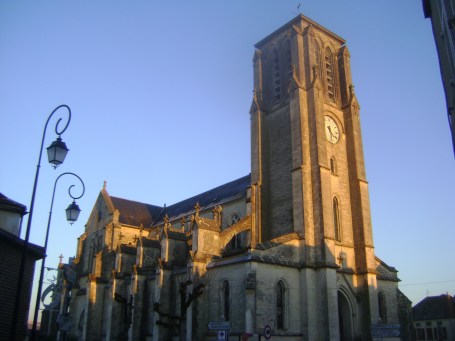
I have in the past mentioned how much I love the ringing of the church bells in France generally, and in particular the ringing of the church bells in “my” little village in Champagne.
I have also promised to expand upon this topic someday, and I have chosen today as the day to do that.
Before beginning I should probably say that there quite a few questions about this topic that I don’t yet know the answers to. And so I would invite anyone who can provide additional perspective or knowledge on the subject to please feel free to do so by commenting below.
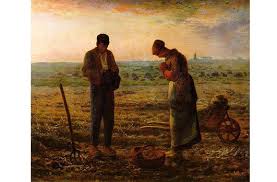
Some of the things I wonder about are 1) Why recently the church bells in our town are ringing much more frequently than they used to–for example, every Sunday morning, not just the Sunday mornings when a mass is being celebrated here. It seems to me this started sometime into the period of confinement, or it might have even been during the beginning stages of déconfinement. In any case, lately, every Sunday morning, usually around 10:30 the bells begin to peal and they peal for a lovely 10 minutes or so. And then they peal again, maybe about 45 minutes later. 2) I would like to know how to learn more about the various patterns and meaning of the ringing. I have learned to recognize the tolling of the bells calling mourners to the church before a funeral, and I have been told that the ringing of the bells at 7 am and 7 pm each day is called “Angelus,” and that it is an ancient pattern of bell-ringing that is a call to prayer for Catholics, to pray a particular prayer commemorating the incarnation of Jesus, which includes a Hail Mary.
Before starting to write this post I looked to see who else had written on this topic to learn what I could from them. I did so a year or so ago and found this really interesting post written a few years ago by an Australian woman. I find this post interesting for the perspective and information she received from locals in the village where she was vacationing, when she asked the about the patterns of the ringing of the church bells there.
This time I found another post, this one by an American woman, also written a couple of years ago. I found this post interesting for the change of opinion this woman experienced when she first encountered the very frequent (and quite loud) ringing of the church bells in the French town she was vacationing in.
Like many people, at first she found the ringing (which continued through the night) annoying. But eventually she came to appreciate it to the extent that she actually missed the ringing of the bells when she had returned home to Huntington Beach, California.
I have never been bothered by the ringing of the bells; au contraire. I should probably add that like the husband of the woman from California, sleeping through innocent ambient background sounds is not a problem for me: therefore, the sound of bells ringing through the night does not interfere with my peaceful slumber.
But, as the Californian woman herself eventually came to feel, I find the regular ringing of the bells–not just on the hour, but on each quarter-hour also–to be comforting/grounding/orienting in a deep and fundamentally human way.
I think perhaps what bothers many people about this bell-ringing is that it is a regular and–some might feel unwelcome–imposition of the outside world into each of our individual private worlds–the one that exists in our minds. And I will readily admit that it indeed does do that.
However, far from resenting this imposition, I find it a very healthy and pleasant reminder that my own internal world, much as I value, respect, and protect it from all manner of unwelcome outside intrusions on a pretty much constant basis, does exist within a much larger world–a world formed by a local, national, international human community. In that regard, I find the ringing of the church bells, though an imposition, unlike many of the sounds that surround me daily in the 21st century, a very welcome one.
I am not a Catholic, but I feel lucky to be included in the daily reminders that Catholic churches around the world offer all within hearing that there is a power greater than and outside ourselves that we can benefit from remembering and calling upon, if we so desire; that we are surrounded by people, not only in our own local communities, but around the world who have a need for and appreciation of such reminders; and that whether we choose to listen to them or not, to appreciate them or not, these church bells, with their lovely musical sounds, will go on ringing through all manner of the chaos, worry, and strife that also surround us constantly.
I was going to say that they ring on “no matter what.” But in fact, I learned through my recent research, that the bells of France did stop ringing during World War II, from the time of the Occupation of the country until the moment of its liberation nearly five years later. That silence surely must have been a sad absence of sound for the French people: and the return of the ringing of the bells when they finally sounded again, incredibly joyful.
I wish I could share with you with the lovely sound of the ringing of the church bells in Essoyes, but my audio tech skills are just not there yet. So instead I will share with you the ringing of the bells from Sacre Coeur in Paris from a few months ago. Although one of the joys of church bells in France is that they do not all sound exactly the same, not at all; yet, in a general way, the sound is quite similar. And to me at least, deeply comforting.
Stay safe, stay well, everyone. Wear those masks, wash those hands, prenez soin de vous…
Janet Hulstrand is a writer, editor, writing coach, and teacher of writing and of literature who divides her time between the U.S. and France. She is the author of Demystifying the French: How to Love Them, and Make Them Love You, and is currently working on her next book, a literary memoir entitled “A Long Way from Iowa.”
Interview with Renée-Michele Payne, Author of Every Time We Say Goodbye

Suzanne and Jean, a handsome young couple, meet and fall in love in the vibrant artistic atmosphere of Nancy in 1928. They marry and move to Paris, which is for Suzanne a dream come true. But their marriage is far from trouble-free, and even before war comes to Europe, much of their time is spent apart. The story of their love affair, which is enduringly passionate, but ultimately tragic, is played out on an international stage from Paris to Tangiers, Morocco, Spain, and various locations in France, as well as prison camps in Germany and escape routes through the Netherlands and Belgium.
A novel inspired by a true story,“Every Time We Say Goodbye” is a compelling story of sacrifice, love, and suffering, rich in period detail. Ultimately it is a story of phenomenal courage, of fierce devotion to country and freedom, of the resiliency and endurance of love. It is also about the devastating and persistent intergenerational wounds of war. I recently interviewed the author, Renée-Michele Payne, about the background of her book, and the process of writing it, via email. Here is our conversation. Janet Hulstrand
Janet: What inspired you want to write this story? And how long did it take you?
Renee: I worked on this book for about 20 years. In 1997, my mother and I were at a department store in the Washington area, when she noticed an elderly woman sitting in a chair at the counter of the beauty salon. My mother approached her, and called out her name. The woman looked up at her, and said: “Forgive me. It was the circumstances.” They cried together for a moment before the woman was called away, for her appointment for a facial.
That was the woman on whom the character of Suzanne is based.
Ever since I learned the details about the couple who was the inspiration for the characters in my novel, I have wanted to write their story. I wanted to solve the mysteries that surrounded them: about the choices they made, their successes and failures, and how the tragedy of the Second World War changed their future together.
The young writer that the character of Jean is based upon had received many positive reviews for his first book, which was a collection of poetic musings. He was asked to write critiques of new publications for many well-known literary journals. An artist painted his portrait, Henri Martinie snapped his photo. The book was translated into Italian, and it was reviewed in the United States, in the Saturday Review. Yet, in spite of an announcement of new works to come, he published nothing after 1930, two years after his early success. Why? What could have happened? I wanted to know.
Another reason I wanted to tell his story was my reaction to what one of the critics had written: that the young writer had to be great, or be nothing. In a factual account I read of a prison escape that “Jean” had helped to engineer, a version of which is detailed in the novel, one of the freed prisoners called him “a pure hero,” the kind of man with whom the Resistance would do miracles to free the country from the jaws of the occupiers and their collaborators. That line brought me to tears. I didn’t want the legacy of such a man to be “nothing.”
At first I was hoping to write a biography, but there were too many gaps that were impossible to fill in through my research, so I decided to use what I already knew, and was able to find out, as the framework for a fictional story, and imagine the details.
The character of Suzanne presented another mystery. As in the book, she changed her identity during the war, and cut off communication with her family. I remember her as a shadowy figure, appearing and disappearing in our lives. My mother loved her, and would tell me stories about her. I mourned her absence from my life. I wanted to know why she had made the choices she did. Was it a result of the trauma of the war? Or was it due to a character flaw? Whenever my mother met someone from her past, they would ask about “Suzanne.” She was clearly someone to be remembered.
I changed the characters’ names for reasons of privacy. I never met the model for Jean, as he was killed before I was born, but the stories I heard about him were the impetus for my research. At the beginning, I knew little about his role in the Resistance, or where he had lost his life. I formed the character not only from the stories I had heard about him, but from the countless queries I sent out, and the research I did.
Unfortunately, most of his family had already passed, and the distant cousins I managed to find knew nothing about him. I was able to obtain a copy of his book, and I was excited to see that it was dedicated to a friend. I began buying multiple copies of his books, and learning about his circle of friends from the dedications he had written in them.
I learned about the place where he had died from the Center for Jewish Documentation in Paris. That also gave me his birthdate. When I received that information, he became alive for me. As in the novel, he was a young writer, born in Paris to a Jewish family originally from the Alsace-Lorraine region. He was the youngest ever to receive a doctorate in letters from the University of Caen, in 1924, at the age of 21, a fact that was reported in several newspapers at that time. His book of poetic musings was published in 1928. In 1930, he married a young Jewish woman from Morocco. She began to study mathematics and physics, and later she worked in a laboratory in Paris.
When the war broke out, Jean joined the fight. He was captured and sent to a prison camp in Germany, from which he escaped. He then joined the Resistance. It was after D-Day, but still in June of 1944 that he was arrested and executed. Suzanne did not learn of the location of his death until a few months later. He was buried initially in the cemetery of the town where the execution took place. Sometime later his body was moved, but I have been unable to find the location of his final resting place.
Janet: What was the hardest thing about writing it? The saddest? The most rewarding?
Renee: The hardest part of writing the novel was the creation of believable three-dimensional characters who would spark and maintain the interest of readers. The saddest part was learning about the traumas and tragedies that befell them at the hands of the Nazis. The most rewarding part was learning each new detail, receiving each new document with another clue, and meeting members of the French Resistance. I also was able to visit the town where Jean and the other résistants were executed, and made a good friend in the president of the local veterans’ association there. My family and I were welcomed to a special ceremony to commemorate V-E day, the day the Nazis were expelled from Europe. That indeed was very special, and rewarding. The president of the veterans’ association was a retired baker. Every year after our visit, he sent us a box of homemade chocolates. I was privileged to know him and his family, and I was touched when his wife called me to tell me of his passing. He was a great man, and a hero of the Resistance.
Janet Hulstrand is a writer, editor, writing coach, and teacher of writing and of literature who divides her time between the U.S. and France. She is the author of Demystifying the French: How to Love Them, and Make Them Love You, and is currently working on her next book, a literary memoir entitled “A Long Way from Iowa.”
Summer in Essoyes
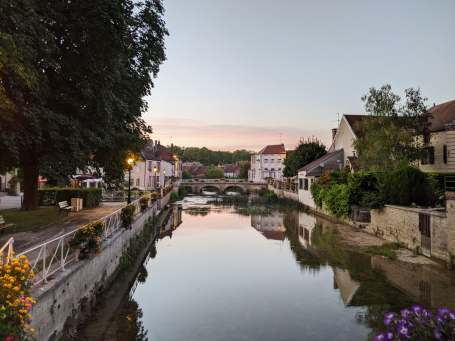
I don’t really think of Essoyes as a tourist town, but it is, among other things, a wonderful place for tourists to visit. This is partly the legacy of Alain Cintrat, who has just ended 20 years of public service as our mayor, and partly the legacy of his mother. Of course there were many other people involved in making their dream of memorializing the history of the Renoir family in Essoyes come true; but if not for their dedication and determination over a period of many years, it would probably not have happened.
In any case, it did happen, and as a result Essoyes has become a lovely and very interesting place for tourists to visit, along with the many other lovely villages in this part of southern Champagne, very near the Burgundian border.
So it was that, just before the quatorze juillet, I noticed that the village square was suddenly full of cars, the physically distanced lines outside the bakery and in our little grocery store were longer, and there were lots of tourists strolling through the town. (You can tell which ones are the tourists: they are the ones wearing sporty casual vacation wear, walking at a very leisurely pace through the streets of the town, rather than on the sidewalks. This is irritating only when you are trying to drive a car through those narrow streets, but it is irritation tempered by the knowledge that having tourists come here is a good thing for Essoyes. It is…)
The rate of COVID cases has begun to tick up in France again, and France is responding. Everywhere you go there are signs reminding people what they can, and in some cases must, do to help protect themselves and others, and slow the rate of infection. In Essoyes, starting in August there will be testing available once a week in the community center. And everyone is hoping that, if everyone continues (or begins!) to follow the recommended guidelines for containing the virus, we can avoid a second wave that would be worse than the first. I suspect health care workers are hoping that more than anyone, let’s try to help them out with that, everyone, shall we?
And so, life has returned more or less to normal–well, to the “new normal”–at least for now. For our family that means raspberry tartes for July birthdays–and we celebrated two of them in our home this month.
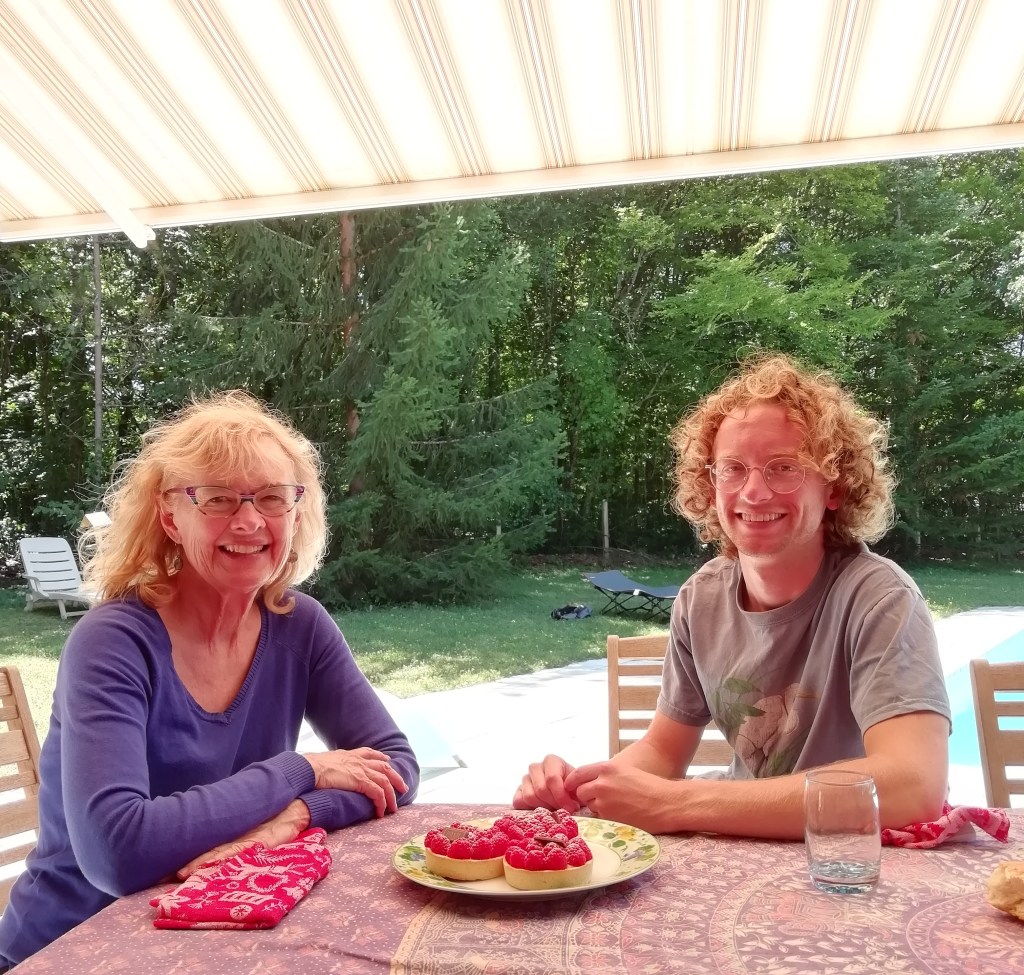
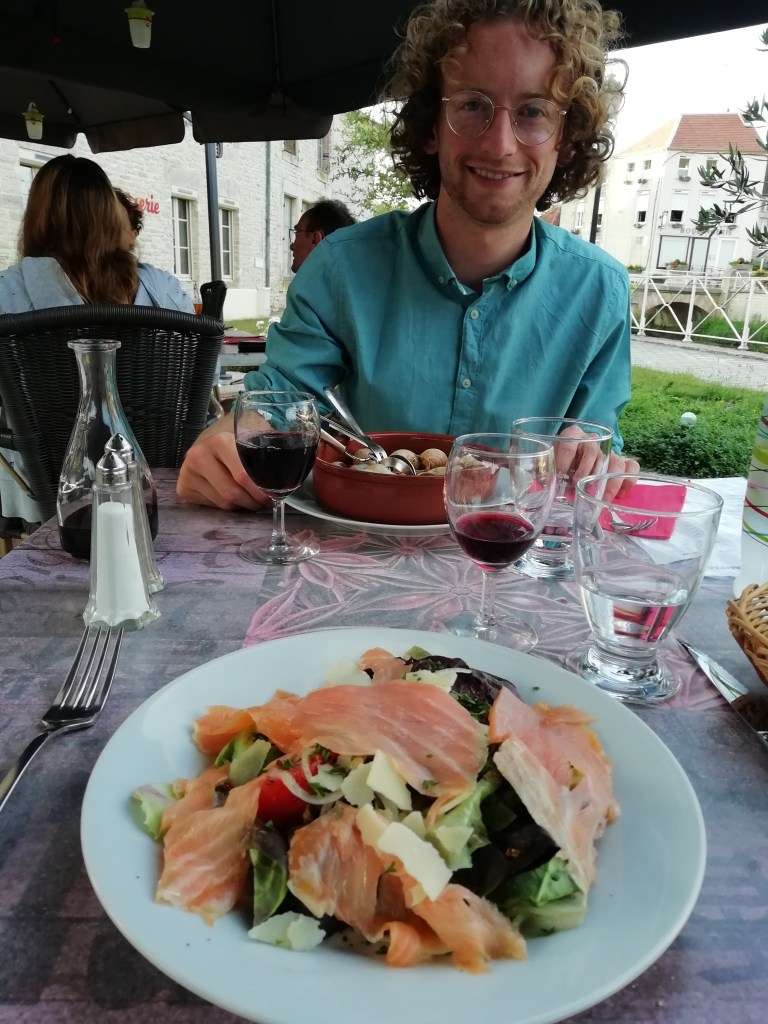
The tartes at lunch were followed by a delicious meal at La Guingette des Arts, on the banks of the Ource River, which flows through the center of Essoyes. (The photo at the top of this post, by the way, taken by “the birthday boy” that night, is not retouched. Believe it or not!) And here’s a photo of him enjoying his escargots at La Guingette.
There will be an organ concert in the church in Essoyes this weekend. How exciting is that? (After nothing happening in the churches for such a long time? Very!)
Wishing everyone a safe, happy continuation. Stay well. Stay safe. Prenez soin de vous.
Janet Hulstrand is a writer, editor, writing coach, and teacher of writing and of literature who divides her time between the U.S. and France. She is the author of Demystifying the French: How to Love Them, and Make Them Love You, and is currently working on her next book, a literary memoir entitled “A Long Way from Iowa.”
Déconfinement continued…
I could start by saying I’ve found it hard to know what to say about anything recently. The words of the poet W. B. Yeats come frequently to my mind about “the center not holding…” It does feel like the world as we have known it is coming apart at the seams, which is unsettling…
Déconfinement Day 17: France Slowly Reopens
In a small rural village, like where I live now, at this time of year crops become a matter of general interest. Even if you’re not personally involved in agriculture, you can’t help but notice the growing and thriving of things….
Déconfinement Day 8
Well we are one week into déconfinement. Such a feeling of liberation, now that we don’t have to take an attestation with us every time we venture outside of the boundaries of our home! (Though we are still required to stay within 100 kilometers unless we have a very good, and strictly defined–defined by the French government–reason for going further than that…)
We are still being very careful though, and of course we need to be, because with everyone suddenly coming out of confinement, I am assuming that that automatically raises the general risk of being infected by the virus. (That is my own very simple layperson’s interpretation, I have not heard anyone say exactly that: but it must be true, no?)
So. I am still waiting to do much of anything, outside of walks outside and the occasional trip to our little Casino supermarket here in town, so I can at least start helping my son carry groceries back home. He has been such a huge help to me throughout the lockdown! When restaurants are open again and it is safe for us to travel he is going to enjoy a very fine meal, my treat! Or maybe we will just stay right here in Essoyes and eat at our own very fine hotel restaurant, Les Demoiselles, with its magnificent view of Essoyes and the surrounding vineyards.
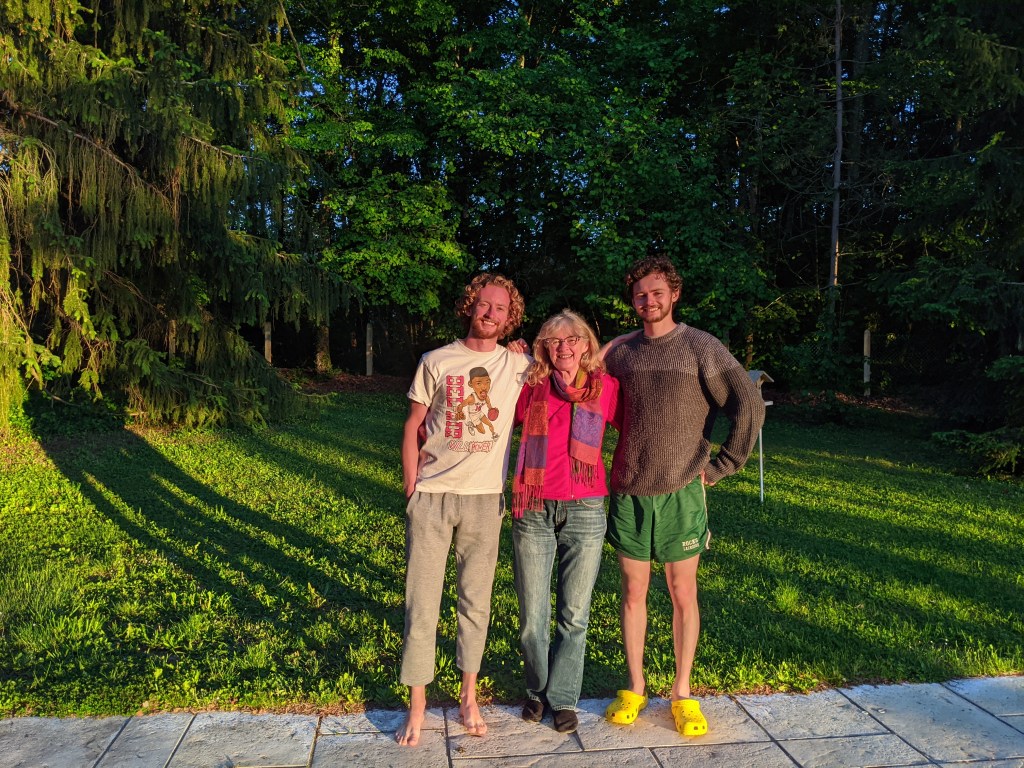
Déconfinement has made it possible for my older son to join us now, too, from the place he was sheltering in place with friends in the south of France: so we are together again, and I am thanking my lucky stars for that.
None of us know one blessed thing about gardening, but today there was talk of us taking the bold step of trying to learn something so we can grow some of our own vegetables in a little “victory garden.” (Please do NOT “stay tuned.” I will let you know if we have any success at all, I promise! )
I continue to watch the news from home with sadness and concern. And I guess that is all I will say about that; except that I am very very sorry that because of the way things have been handled there, many dear friends and family members are not going to be allowed into Europe anytime soon… 😦
Meanwhile here in Essoyes the wheat and colza continue to grow, the bright red poppies are beginning to spring up in the fields, and the vineyards are doing okay too this year (I think).
There is also a field of what I think is cow vetch (in English) vesce de vache in French, near our home. (Now do you see why I wanted to learn French?) 🙂

Stay well everyone. Prenez soin de vous…and here’s a helpful reminder from the French government about how to go about doing that.
Janet Hulstrand is a writer, editor, writing coach, and teacher of writing and of literature who divides her time between the U.S. and France. She is the author of Demystifying the French: How to Love Them, and Make Them Love You, and is currently working on her next book, a literary memoir entitled “A Long Way from Iowa.”
Déconfinement Day 1
Today is the day that France begins to progressively, and slowly open up again, after eight weeks of quarantine. With an emphasis on the word “slowly”…
Lockdown in France: Day 42
…What is interesting of course is how it gets harder to be patient with the lockdown with each passing day: but also one must acknowledge that, having recognized the danger and the threat out there, and the incredibly robust contagiousness of this virus, the thought of returning “to normal” is pretty damn scary…
 Writing from the Heart, Reading for the Road